Selecting a Vibrating Screen for High-Capacity Quarry and Aggregate Processing
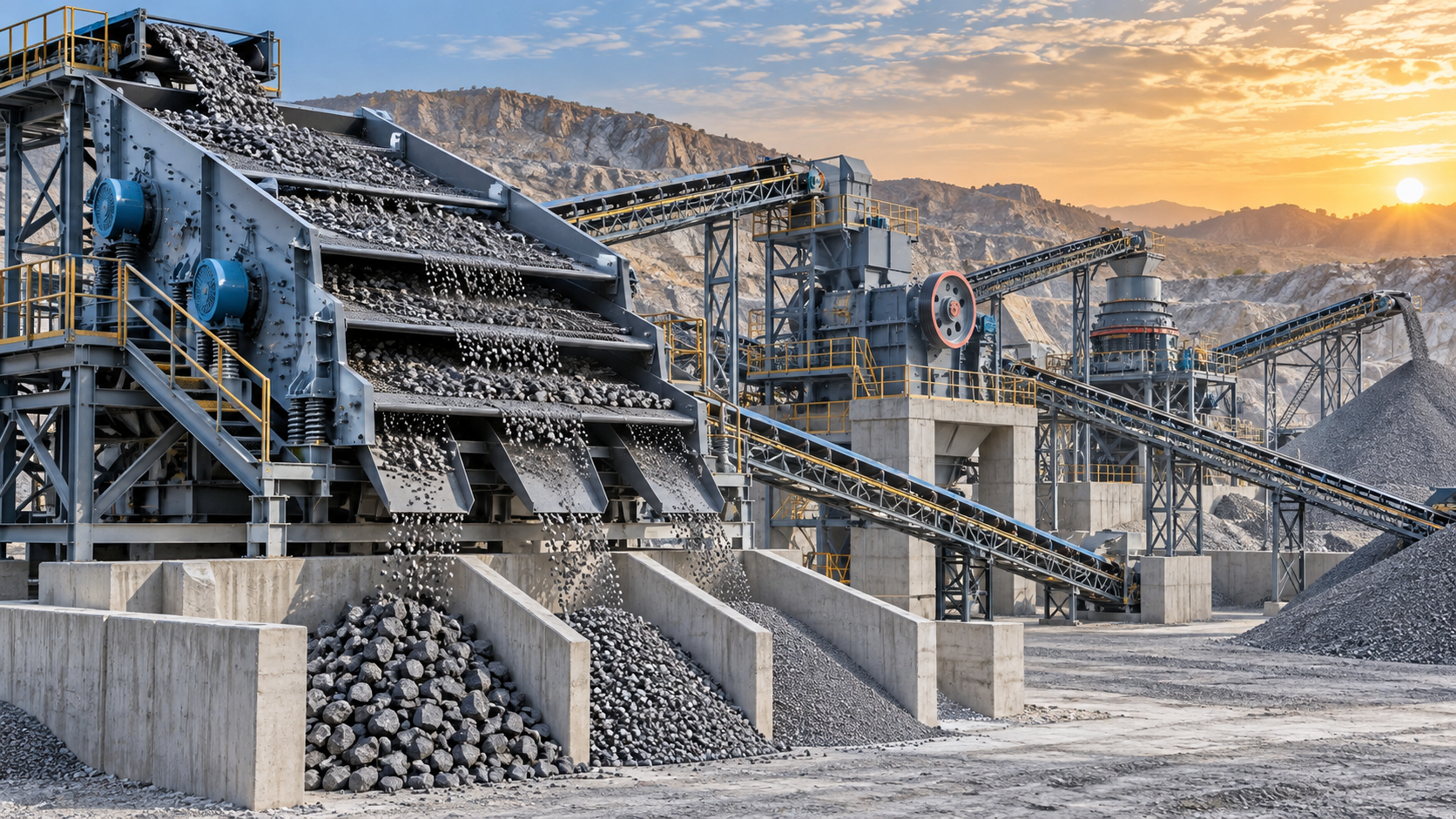
Selecting a Vibrating Screen for a high-capacity quarry is not simply a matter of choosing the largest deck or the highest motor rating. In aggregate processing, the screen governs more than final sizing: it affects crusher loading, recirculating load, product shape, stockpile consistency, water use, and the amount of unplanned maintenance a plant team must absorb.
For technical evaluators, the real question is whether a screen will sustain the required separation efficiency at the plant’s expected feed conditions—not merely whether it can meet a nominal capacity shown in a catalogue. Basalt, granite, limestone, recycled concrete, wet clay-bearing material, and manufactured sand all behave differently on a deck. A practical selection process starts with the material stream and works backward toward screen configuration.
Start with the Screening Duty, Not the Machine Size
Before comparing models, define exactly what the Vibrating Screen must accomplish within the circuit. A scalping screen ahead of a primary crusher is exposed to impact, large top-size rock, and occasional oversize contamination. A sizing screen after secondary or tertiary crushing faces a different challenge: maintaining sharp separation while handling a high percentage of near-size particles. A dewatering screen, meanwhile, is selected around moisture removal and solids recovery rather than conventional cut-point efficiency.
The duty statement should include the following operating inputs:
- Design throughput and expected peak throughput, expressed in tonnes per hour;
- Maximum feed size, feed distribution, and percentage of undersize already present;
- Bulk density, particle shape, abrasiveness, and moisture content;
- Required product sizes and permitted oversize or undersize contamination;
- Whether the circuit is dry, wet, or likely to experience seasonal moisture changes;
- Available installation space, support structure limits, and maintenance access.
A screen selected only on average tonnage often becomes a bottleneck when the quarry encounters wetter benches, a harder rock zone, or a surge from upstream crushing. It is usually wiser to assess capacity at the anticipated difficult operating condition, with reasonable allowance for feed variation and wear over time.
Capacity Depends on the Open Area That Remains Available in Service
The screening surface is where theoretical capacity becomes real plant output. Deck area matters, but usable open area matters more. A large deck fitted with unsuitable media can blind, peg, or prematurely wear, reducing the effective screening zone long before the screen body reaches the end of its service life.
For coarse scalping and heavy-duty quarry feed, steel wire mesh or punched plate may be appropriate where impact resistance is the priority. For medium and fine aggregate sizing, polyurethane screen media often provides longer wear life, lower noise, and better resistance to abrasion, particularly with hard stone. Its smaller open area compared with wire mesh must be considered during capacity calculations. Modular media also allows worn high-impact zones to be replaced without changing an entire deck.
Near-size material deserves special attention. Particles close to the aperture dimension require more time and more opportunities to present themselves to the opening. If a plant needs a clean 5–10 mm or 10–20 mm product, an evaluator should avoid assuming that the same deck area used for coarse separation will provide the same efficiency at a tighter cut.
Match Motion to Material Behavior
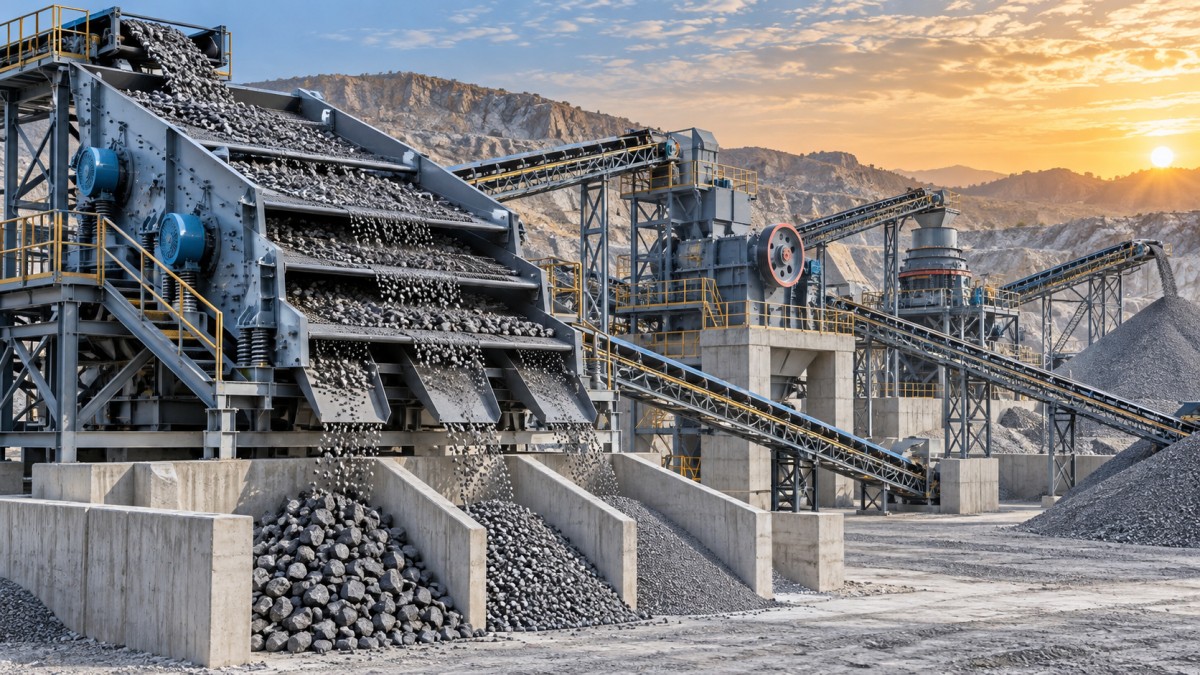
Screen motion determines how material stratifies, conveys, and contacts the screening media. Circular or inclined vibrating screens are widely used for quarry classification because they move material steadily across multiple decks while offering dependable throughput. Horizontal screens can be valuable where a flatter installation angle, longer retention time, or high efficiency on difficult separations is required. High-frequency units are generally considered for finer material and sand applications, where conventional stroke patterns may not provide adequate separation.
Key parameters include stroke, speed, vibration angle, and deck inclination. Larger stroke can help move heavy, coarse feed and reduce the risk of material building up on the deck. Higher frequency may assist finer screening but is not a universal cure for wet or sticky material. The correct combination depends on the feed, aperture, and desired residence time.
One common mistake is to treat “more vibration” as a solution to every screening problem. Excessive acceleration can shorten bearing and screen media life, increase structural stress, and throw material too quickly over the deck. The objective is controlled stratification: fines should reach the media, near-size particles should have enough exposure to pass, and oversize should discharge without carrying excessive usable product with it.
Consider the Whole Crushing and Screening Circuit
A Vibrating Screen should be evaluated as part of the process line, not as an isolated purchase. If the upstream crusher produces a high proportion of flat or elongated particles, screening behavior may change even when the nominal gradation appears acceptable. If feed arrives unevenly from a conveyor, material can concentrate on one side of the deck and leave other areas underused. A properly designed feed box, distribution arrangement, and chute transition are often as important as the screen’s nameplate capacity.
When processing hard basalt or granite, crusher selection also influences the screen’s workload and wear profile. For example, a primary-stage solution such as the FEIFAN PXE Jaw Crusher With Magnetic Separator Option, 75 Kw Motor, For Basalt & Granite, High Wear Resistance Jaw Plates Crusher may be considered alongside the screening layout where material is abrasive and tramp metal control is relevant. The downstream screen should then be sized around the crusher discharge distribution, surge conditions, and required recirculation path—not simply the crusher’s rated output.
For high-capacity plants, check whether the screen can accommodate future changes in the circuit. A new tertiary crusher, additional sand-making stage, or different market demand for smaller aggregate fractions may change the required deck arrangement. Allowing for alternate media options and practical adjustment of operating parameters can protect the investment when the quarry plan evolves.
Maintenance Access Is a Selection Criterion
In demanding aggregate applications, serviceability has a direct effect on cost per tonne. A screen may look technically suitable on paper yet create delays if side plates, exciters, bearings, or media panels are difficult to reach. Evaluators should inspect the practical details: lifting points, deck access, side tensioning systems, lubricant access, guard design, and the clearance required to remove screen panels safely.
Ask how the machine manages the areas that normally wear first. Feed-end liners, cross members, discharge lips, side plates, and media support rails should be designed for inspection and replacement. For abrasive quarry stone, the screen media supplier’s ability to match wire mesh, polyurethane panels, or hybrid configurations to each deck can be more valuable than choosing a single material for every application.
Reliability also depends on installation quality. The base frame, springs, isolation system, motor alignment, and chute connections must permit free screen movement. Rigidly connected chutes or poorly designed flexible seals can transmit stress into the screen body and distort the intended vibration pattern.
A Practical Evaluation Sequence
Technical teams can make decisions more confidently by reviewing candidate equipment in this order:
- Confirm the feed data with actual quarry samples or recent production records.
- Define the required cut sizes, target efficiency, and allowable product contamination.
- Calculate deck area and capacity using the worst credible feed condition, not only the average.
- Select deck count, aperture arrangement, and media type for each screening stage.
- Verify vibration parameters against the material’s size range, moisture, and abrasiveness.
- Review the interface with crushers, feeders, conveyors, chutes, and stockpile arrangements.
- Inspect maintenance access, spare parts strategy, and support capability before final approval.
A capable equipment supplier should be prepared to discuss these details rather than offering a generic model recommendation. Manufacturers that combine screen production, screen media manufacturing, and complete aggregate-line engineering can often identify interface issues earlier—especially where custom meshes, conveyor geometry, crushing stages, and screening requirements need to work as one system.
The Best Screen Is the One That Keeps the Plant Balanced
The right Vibrating Screen is not necessarily the unit with the highest advertised throughput. It is the unit that maintains stable product gradation, protects downstream equipment, remains accessible for service, and continues to perform as quarry conditions change. By evaluating material behavior, usable deck area, vibration dynamics, circuit integration, and maintenance realities together, technical decision-makers can select screening equipment that supports dependable high-capacity aggregate production for the long term.
Leave A Message
If you are interested in our products and want to know more details, please leave a message here, we will reply you as soon as we can.