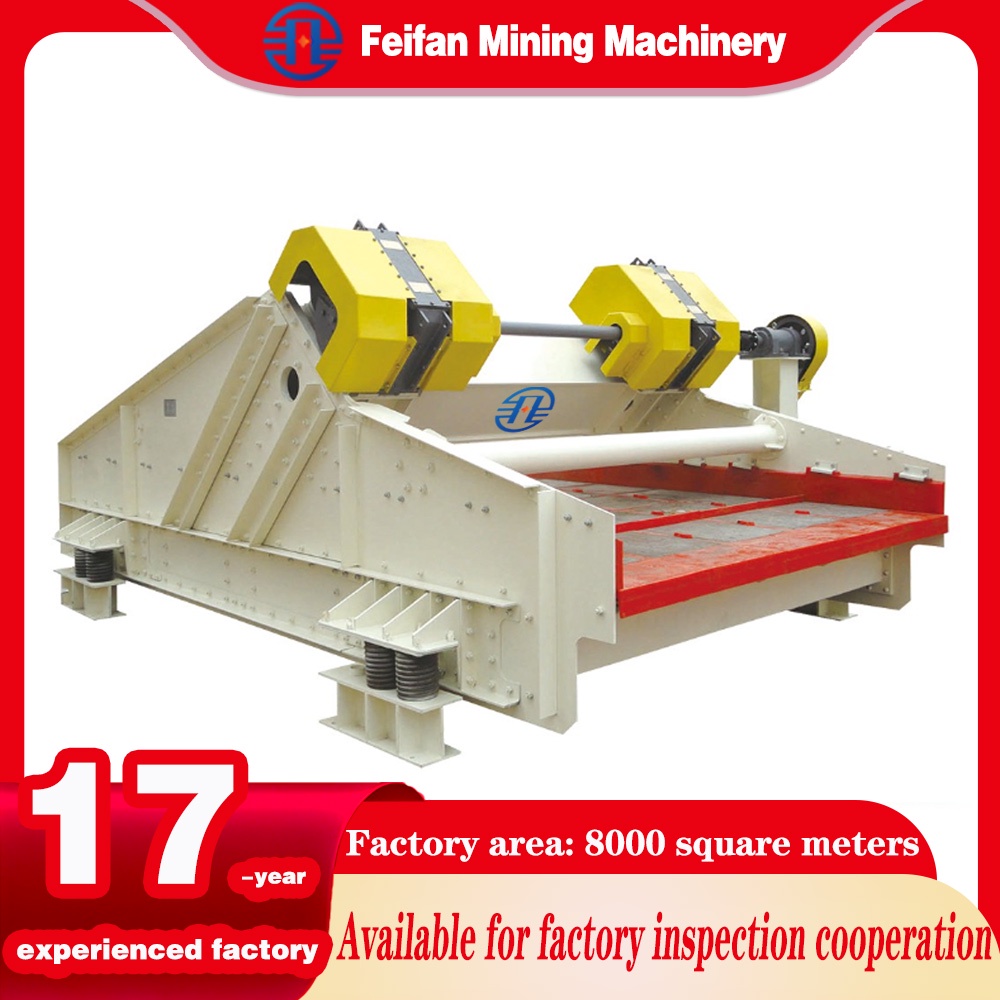
Linear Vibrating Screen Material Overflow Problems and Practical Remedies
Material overflow in a Linear Vibrating Screen often shows up in a very practical way: material starts spilling from the discharge side or edges before the screen has done its separation job. For operators in sand, gravel, and mining lines, this usually means mixed particle sizes, unstable output, more cleanup work, and unnecessary pressure on the next machine in the process.
Many people first suspect the screen surface itself, but overflow is usually not caused by one factor alone. Feed conditions, installation angle, vibration parameters, moisture, screen mesh condition, and material distribution can all combine to create the same symptom. The useful approach is to treat overflow as a system problem and check it in a practical order.
What Material Overflow on a Linear Vibrating Screen Usually Looks Like
In daily production, overflow does not always mean a dramatic spillage event. A common situation is that material moves too quickly across the deck, does not have enough time to stratify, and leaves the machine with too many fines or too much unqualified material. In other cases, material accumulates near one side and spills locally, even though the total feed rate does not seem excessive.
This creates several downstream problems. Finished aggregate quality becomes inconsistent, recirculating load may increase, and operators often respond by slowing the line or stopping it for repeated cleaning. If the condition continues, wear on the screen mesh, exciter components, and supporting structure can also become less predictable because the load is no longer distributed evenly.
Why This Problem Is Often Misjudged
A frequent mistake is to assume that overflow always means the machine is too small. Sometimes that is true, but many overflow issues come from operating conditions rather than base machine size. Another common misunderstanding is to focus only on the motor or vibration force while ignoring feed consistency and mesh condition.
For example, a Linear Vibrating Screen can still overflow when the nominal capacity looks reasonable on paper if the feed suddenly becomes wet, sticky, segregated, or heavily concentrated at one end of the inlet. In that situation, the screen is not necessarily under-designed; it may simply be working under conditions different from the original assumption.
Start the Check from the Symptom, Not from Assumptions
When overflow appears, the most efficient method is to look at how the material behaves on the deck. Is it rushing straight to the outlet? Is it piling up at the feed end? Is one side carrying most of the load? Are near-size particles blocking openings and forcing more material to ride over the surface? These visual signs usually narrow the cause much faster than adjusting settings at random.
It also helps to separate the problem into three layers: feed-related causes, machine-related causes, and screen-media-related causes. This avoids changing multiple variables at the same time and makes it easier to confirm whether the adjustment is actually helping.
A Practical Troubleshooting Checklist for Linear Vibrating Screen Overflow
- Check whether the feed rate is stable. Overflow often begins when the actual feed becomes higher than the screen can handle for that material condition. Watch for surges from the feeder, uneven loader dumping, or sudden changes caused by upstream crushing stages.
- Look at feed distribution across the screen width. If most material enters one side, the overloaded section may overflow while the other side remains underused. A feed box, distributor, or chute alignment issue is often behind this.
- Inspect the material condition. Wet, sticky, clay-rich, or flaky material behaves differently from dry free-flowing stone. It may slide, smear, or blind the openings, reducing effective screening area and increasing carryover.
- Confirm vibration parameters. If amplitude is too low, the material may not loosen and stratify well. If the movement pattern is too aggressive for the application, material can travel too quickly and leave before proper separation.
- Check installation angle and levelness. A screen body that is not properly leveled can make material run to one side. An unsuitable inclination can also shorten residence time and increase overflow risk.
- Inspect the screen mesh condition. Worn openings, pegging, blinding, tears, and loose tension all reduce screening efficiency. What looks like a capacity problem may really be a loss of usable open area.
- Review deck selection and aperture design. If the opening shape, panel thickness, or media type does not match the material, overflow may persist even after mechanical adjustments.
Practical Remedies That Usually Make the Biggest Difference
The first remedy is often the simplest: stabilize the feed. A Linear Vibrating Screen performs best when the incoming load is continuous and evenly spread. If the upstream feeder is pulsing or dumping heavily in one zone, fixing that inconsistency may improve performance more than changing the screen itself.
The second step is to correct material distribution. Operators sometimes overlook the chute because it seems static, but small changes in chute angle, drop point, or spreader design can significantly improve how material covers the deck. Even distribution gives the whole screening area a chance to work, which reduces local overflow.
The third step is to adjust vibration and running condition within the equipment's intended range. This should be done carefully. Increasing force is not always the answer, because a faster material travel speed may reduce screening time. The goal is not simply stronger vibration, but a motion state that lets the material loosen, stratify, and pass correctly.
The fourth step is to deal with moisture and blinding. If the feed tends to stick or block apertures, the screen surface may need a more suitable material or structure. In some operations, changing to wear-resistant polyurethane media helps maintain more stable openings under impact and abrasive conditions. Where this fits the process, using FEIFAN OEM Long Life Impact Resistant Screen for Mining Quarry Polyurethane Vibrating Screen Mesh can be part of the correction path, especially when the issue is tied to screen surface durability and repeated media wear rather than only machine adjustment.
How to Tell Whether the Screen Mesh Is Part of the Problem
It is worth paying special attention to the screen media because overflow and poor screening often appear together. If the apertures are partially blocked, stretched, or worn irregularly, the material layer may stop behaving as expected. Instead of stratifying and passing through, more particles stay on top and move toward discharge as overflow or misplaced oversize.
Signs that point toward the mesh include frequent cleaning, visible buildup around openings, faster-than-expected wear in high-impact zones, and a continuing drop in separation quality even after feed and vibration checks. In those cases, it may be more practical to review mesh material, opening form, and impact resistance than to keep readjusting the machine.
For operations that process abrasive quarry or mining material, some users prefer polyurethane screen panels because they can offer a balance between wear resistance and screening stability. That does not mean they are the answer for every line, but when overflow is linked to premature wear or unstable opening condition, a product such as FEIFAN OEM Long Life Impact Resistant Screen for Mining Quarry Polyurethane Vibrating Screen Mesh can be evaluated as one part of a broader screening improvement plan.
When the Cause Is Process-Related Rather Than Machine-Related
Sometimes the screen is blamed for overflow even though the real change happened earlier in the process. A different crusher setting may have increased the proportion of near-size particles. A change in raw material source may have introduced more fines, moisture, or clay. A conveyor transfer point may now be feeding off-center. These process changes can make a previously stable Linear Vibrating Screen appear faulty even when its mechanical condition is still acceptable.
That is why it helps to compare today's feed characteristics with normal operating conditions before making hardware decisions. If the particle size distribution or material behavior has shifted, the remedy may involve upstream adjustment, pre-screening, improved washing, or feed conditioning rather than only modifying the screening machine.
How to Reduce the Chance of Repeat Overflow
Once the immediate issue is under control, the next task is to keep it from returning. In practice, repeat overflow is often caused by delayed maintenance or by small process drifts that are ignored until the problem becomes visible again. A short inspection routine is usually more useful than occasional major interventions.
That routine can include checking whether the feed is centered, verifying that the deck remains clean and evenly loaded, inspecting mesh tension and wear, and watching whether material travel speed looks different from normal. It is also helpful to record what changed before the overflow started, such as a new feed source, a different moisture condition, or a recent parts replacement. Those notes make future troubleshooting much faster.
Frequently Asked Questions
Does overflow always mean the Linear Vibrating Screen is undersized?
No. Oversizing or undersizing can be a factor, but overflow is often caused by uneven feeding, unsuitable vibration settings, blocked openings, moisture, or poor material distribution across the deck.
Should I increase vibration force first when material overflows?
Not automatically. More force may move material faster and reduce screening time. It is better to check feed stability, distribution, and screen surface condition first, then adjust vibration based on observed material behavior.
How do I know if moisture is the main cause?
If material starts sticking, smearing, or blinding the mesh openings, and the problem becomes worse in damp conditions, moisture is likely contributing. In those situations, media selection and upstream material conditioning both deserve attention.
Is changing the screen mesh enough to solve overflow?
Sometimes, but not always. A better mesh can help if the current media is wearing quickly, blinding, or losing effective open area. If the root cause is unstable feed or poor chute design, the overflow may continue until those issues are corrected.
When should professional technical support be involved?
If overflow continues after checking feed rate, material distribution, vibration condition, installation level, and screen media, it makes sense to involve equipment or screening specialists. Persistent issues often involve multiple factors that need coordinated review.
Conclusion
Material overflow on a Linear Vibrating Screen is usually manageable once the problem is broken down in the right order. Instead of treating it as a single machine fault, it is more useful to check feed stability, deck loading, vibration behavior, installation condition, and screen media performance together. That approach leads to practical corrections and helps avoid repeated trial-and-error adjustments.
If you are dealing with similar overflow symptoms, start with what the material is doing on the deck, not with assumptions about the equipment. In most cases, a careful process check combined with suitable screen media and operating adjustments will point to the most reasonable remedy.