Key Sand Washing Machine Parts and What They Actually Do
Why do sand washing machine parts matter so much?
When people compare a sand washing machine, capacity usually gets the attention first. In practice, the parts decide whether that capacity is sustainable.
A machine may look similar from the outside, yet internal parts change washing efficiency, finished sand cleanliness, water loss, wear rate, and downtime.
That is why understanding parts is useful before purchase, during maintenance planning, and when troubleshooting unstable output.
For aggregate plants, the goal is not simply to wash sand. The real goal is to remove fines and impurities while keeping production stable and operating cost controlled.
Manufacturers with long experience in mining equipment usually focus on this balance. In Binzhou, Shandong, FEIFAN’s group has spent years building complete sand and gravel equipment lines, so parts selection is often treated as a system issue, not a single-component issue.
Which parts actually do the main work inside a sand washing machine?
The short answer is that several parts share the work. No single part can carry washing performance alone.
Impeller or wheel
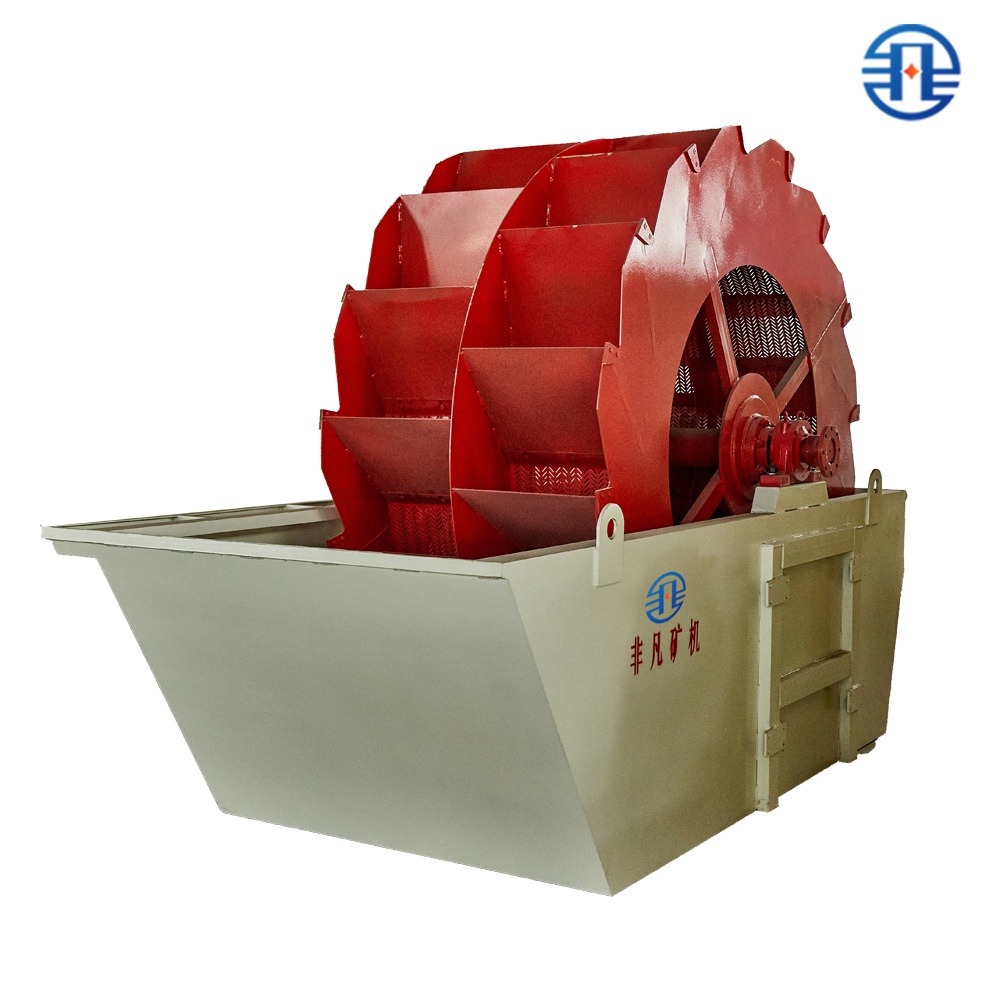
This is the core working part in many wheel sand washers. It stirs material, lifts sand, and helps separate mud, dust, and lightweight impurities.
If the impeller design is weak, sand loss increases and cleaning becomes uneven. A heavier-duty wheel usually handles abrasive feed better.
Gearbox and transmission parts
The gearbox, motor, pulley, coupling, and bearings transfer power smoothly. They keep the washing action stable under load.
Once transmission parts wear out, you may see vibration, noise, slipping, and unstable discharge. Those problems often raise maintenance cost faster than expected.
Screen meshes and dewatering sections
These parts help control particle retention and water removal. They matter especially when the plant wants tighter finished sand grading.
In actual applications, wear-resistant materials make a difference here. Some plants also pair washing systems with screening products such as FEIFAN OEM Custom Polyurethane And Rubber Wear Parts For Mining Screening And Material Handling Systems to improve service life in abrasive conditions.
Tank, shaft, and sealing parts
The tank holds slurry during washing. The shaft supports rotating movement. Seals protect bearings and reduce contamination from water and fines.
These parts are less visible, but they strongly affect durability. Poor sealing often leads to early bearing failure.
How can you tell which parts affect output quality the most?
A useful way to judge parts is to connect each one to a visible production result. That makes comparison easier.
More often, output problems come from parts working poorly together, not from one dramatic failure. That is why line-level matching matters.
A group that also builds crushers, vibrating screens, conveyors, feeders, and custom meshes usually has an advantage here, because upstream and downstream conditions are already considered.
What parts should be checked first when choosing or replacing components?
Start with the parts that face direct abrasion and continuous motion. Those usually drive both maintenance frequency and lifecycle cost.
- Check impeller material, thickness, and structural reinforcement.
- Confirm bearing brand, sealing method, and lubrication access.
- Review gearbox load capacity and maintenance convenience.
- Compare screen mesh wear life under your actual feed conditions.
- Ask whether wear parts are standard, custom, or difficult to source later.
This is where many comparisons become clearer. A low initial price may hide expensive replacement cycles.
For plants handling sharp aggregates, recycled material, or heavy clay contamination, wear parts deserve extra attention. In these conditions, tailored components often outperform generic ones over time.
That is also why some operators look beyond the washer itself and evaluate matching screening and handling parts, including FEIFAN OEM Custom Polyurethane And Rubber Wear Parts For Mining Screening And Material Handling Systems, when planning a longer maintenance cycle.
Where do people usually misjudge sand washing machine parts?
A common mistake is assuming all parts are interchangeable if the machine size looks similar. In reality, fit, material grade, and load design can vary a lot.
Another misjudgment is focusing only on visible wear. Hidden damage in bearings, seals, or transmission parts often causes the more expensive shutdown.
Some also overestimate the value of hard material alone. Hardness matters, but toughness, resilience, and processing accuracy matter too.
Need to compare quickly? Use this simple check:
- Does the part match the feed size and material abrasiveness?
- Can it maintain stable output during long shifts?
- Is replacement straightforward on site?
- Will supply and after-sales support remain available?
For overseas projects, this last point becomes even more important. Reliable parts support often protects project schedules better than a small upfront saving.
So what is the practical next step before making a decision?
Begin with the feed material, target output, and working hours. Those three points usually tell you which parts deserve the closest review.
Then compare parts at system level. A sand washing machine works best when its wear parts, screen meshes, conveyor flow, and upstream crushing conditions are aligned.
This is especially relevant for full-line projects. Companies with integrated R&D, production, EPC capability, and after-sales support can often identify parts-related risks earlier.
In simple terms, the best choice is rarely the machine with the longest parts list. It is the one whose parts are correctly matched, durable in your conditions, and easy to maintain.
If you are reviewing options now, build a short checklist around wear parts, transmission reliability, sealing, mesh life, replacement cycle, and service support. That makes later comparisons far more accurate.
Leave A Message
If you are interested in our products and want to know more details, please leave a message here, we will reply you as soon as we can.