How Vertical Shaft Impact Crushers Shape High-Quality Aggregate Products
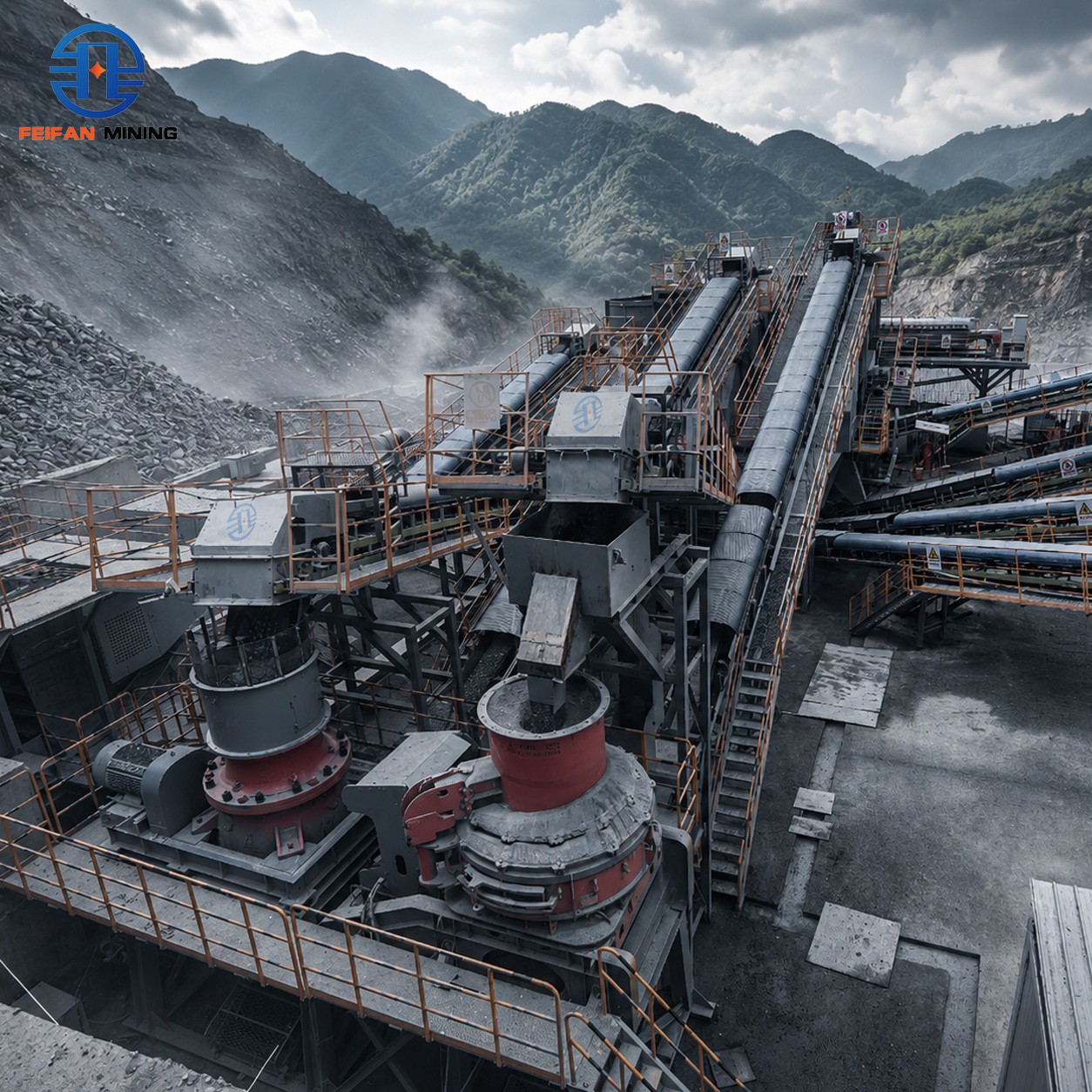
A Vertical Shaft Impact Crusher is often the machine that determines whether an aggregate plant produces merely acceptable material or consistently high-quality finished products. Primary and secondary crushers reduce rock efficiently, but they do not always deliver the cubical shape, controlled fines content, or tight gradation required for concrete aggregate, asphalt mixes, manufactured sand, and demanding infrastructure work. The VSI is usually placed near the end of the crushing circuit because it refines what the earlier stages cannot.
For operators, the key point is simple: VSI performance is not judged only by tonnes per hour. A machine may appear productive while creating too much undersize material, wearing parts too quickly, or sending elongated particles into the final stockpile. The better question is whether the crusher is producing the required particle shape and size distribution at a stable operating cost.
Why Impact Crushing Changes Aggregate Shape
Unlike compression crushers, which break rock mainly between fixed and moving surfaces, a Vertical Shaft Impact Crusher accelerates feed material through a high-speed rotor. The material is then thrown against a rock bed, anvil surfaces, or a combination of both, depending on the machine design and crushing mode. This high-energy impact breaks particles along natural fracture planes and tends to remove weak edges and flat faces.
That is why VSI crushing is widely associated with more cubical aggregate. Cubical particles generally pack more predictably in concrete and asphalt mixtures than flaky or needle-shaped particles. They also improve the appearance and handling behavior of manufactured sand. However, “better shape” is not automatic. Feed material, rotor speed, chamber configuration, and screen efficiency all influence the final result.
In a typical hard-rock circuit, a cone crusher may produce a workable intermediate product, but the discharge can still contain particles that are too elongated for the target specification. Sending that material through a VSI can improve the shape substantially. In soft or highly weathered rock, though, aggressive impact crushing may generate excessive fines. This is where operators need to resist the temptation to run the machine at maximum speed simply because the motor load allows it.
Feed Preparation Has More Influence Than Many Operators Expect
A VSI works best with a controlled, evenly distributed feed. Oversized material, sudden surges, excessive moisture, and a large proportion of natural fines can all make output unstable. If feed enters the rotor unevenly, wear may become concentrated on one side, vibration can increase, and product quality may drift even when the crusher itself appears mechanically sound.
The feed size should remain within the crusher manufacturer’s stated range. This is not simply a protection rule. When particles are too large, the rotor may not accelerate them consistently, and reduction becomes less predictable. When the feed is too fine, the machine can spend energy re-crushing material that is already near the desired size, increasing fines production without adding useful value.
A stable screening circuit ahead of and after the VSI matters just as much as the crusher setting. In hard-rock applications, a banana screen can help separate material quickly across several deck sections and reduce the chance of sending unsuitable feed back through the circuit. Equipment such as the FEIFAN High Capacity Banana Vibrating Screen with Adjustable Amplitude for Hard Rock Crushing Operations Vibrating Screen is relevant not as an add-on, but because screen performance directly affects crusher loading, recirculating load, and final gradation.
Rotor Speed: The Useful Adjustment That Can Also Create Problems
Rotor speed is one of the most influential operating variables in a Vertical Shaft Impact Crusher. Increasing tip speed normally raises impact energy. This can improve particle shaping and reduction, especially when processing strong, angular stone. Yet the trade-off is real: higher speed often means faster wear, more power draw, and a greater proportion of fine material.
When operators see poor particle shape, the first reaction is often to increase speed. Before doing that, check the feed first. A poorly graded feed, a worn rotor, blocked discharge zones, or an inefficient screen can all make the product look worse than it should. Raising speed may hide the symptom for a short time while making the actual problem more expensive.
A practical approach is to make one controlled adjustment at a time, then compare product samples from the same operating period. Look at the retained sizes, fines content, visual particle shape, power trend, and wear condition together. No single indicator tells the whole story. A cleaner-looking product is not necessarily a better product if it falls outside the required grading envelope.
Rock-on-Rock and Rock-on-Anvil Crushing Modes
Most VSI designs use either rock-on-rock crushing, rock-on-anvil crushing, or an arrangement that can support both. In rock-on-rock operation, accelerated feed strikes a material bed formed inside the crushing chamber. This mode is often chosen when particle shape is the priority and when the operator wants to limit metal wear component consumption.
Rock-on-anvil operation directs material against hardened impact surfaces. It can provide stronger reduction in certain applications, but wear rates may be higher, particularly with abrasive feed. Neither mode is universally better. Quarry rock with high abrasiveness, recycled concrete, and different manufactured-sand targets can justify different choices. The operating decision should follow the required product and feed characteristics, not a generic rule.
This is also why whole-line design is more reliable than selecting a crusher in isolation. The feeder, crushing stages, conveyors, washing equipment, screen media, and stockpile arrangement all affect what reaches the VSI and what leaves the plant. Companies that manufacture crushers, screens, conveyors, sand-making equipment, washing systems, and custom polyurethane or steel screen meshes can evaluate those connections more directly during EPC planning and after-sales troubleshooting.
What to Monitor During a Normal Shift
Experienced operators usually notice a VSI issue before a laboratory result confirms it. A change in sound, an unstable ampere reading, unusual vibration, or an unexpected rise in recirculating material can signal that the crusher is no longer operating in its intended zone. Waiting until final aggregate fails a quality check is rarely the best maintenance strategy.
- Keep feed distribution even and avoid sudden surges from the upstream conveyor.
- Inspect rotor wear parts, feed tube condition, chamber liners, and fastening components at planned intervals.
- Watch for excessive moisture or clay contamination, which can impair screening and alter the effective feed grading.
- Compare final samples against project specifications rather than relying only on visual appearance.
- Record speed changes, feed changes, and maintenance actions so quality shifts can be traced back to a likely cause.
Wear-part management deserves particular attention. Replacing parts too late can damage more expensive components and change the crusher’s internal flow pattern. Replacing them too early wastes usable life. The right inspection interval depends on material abrasiveness, throughput, rotor configuration, and actual operating hours; it should be established from site records rather than copied from another plant.
Quality Is a Circuit Result, Not a Crusher Promise
A Vertical Shaft Impact Crusher is highly effective when the production target calls for shaped aggregate, controlled manufactured sand, or lower flakiness. But it cannot correct every upstream problem. If the raw material contains excessive clay, the feed grading swings widely, or the screen does not separate material accurately, even a well-maintained VSI will struggle to hold a consistent final product.
For aggregate plants serving concrete, road base, asphalt, water conservancy, or mining projects, the most dependable approach is to define the product standard first, then tune the circuit around it. That includes checking the source rock, selecting appropriate crushing stages, matching screen media to the material, and setting the VSI for the required balance between shape, capacity, fines, and wear. The machine is powerful, but the operator’s judgment is what turns that energy into saleable aggregate.
Leave A Message
If you are interested in our products and want to know more details, please leave a message here, we will reply you as soon as we can.