How to set up a mobile crushing station for small quarry safely
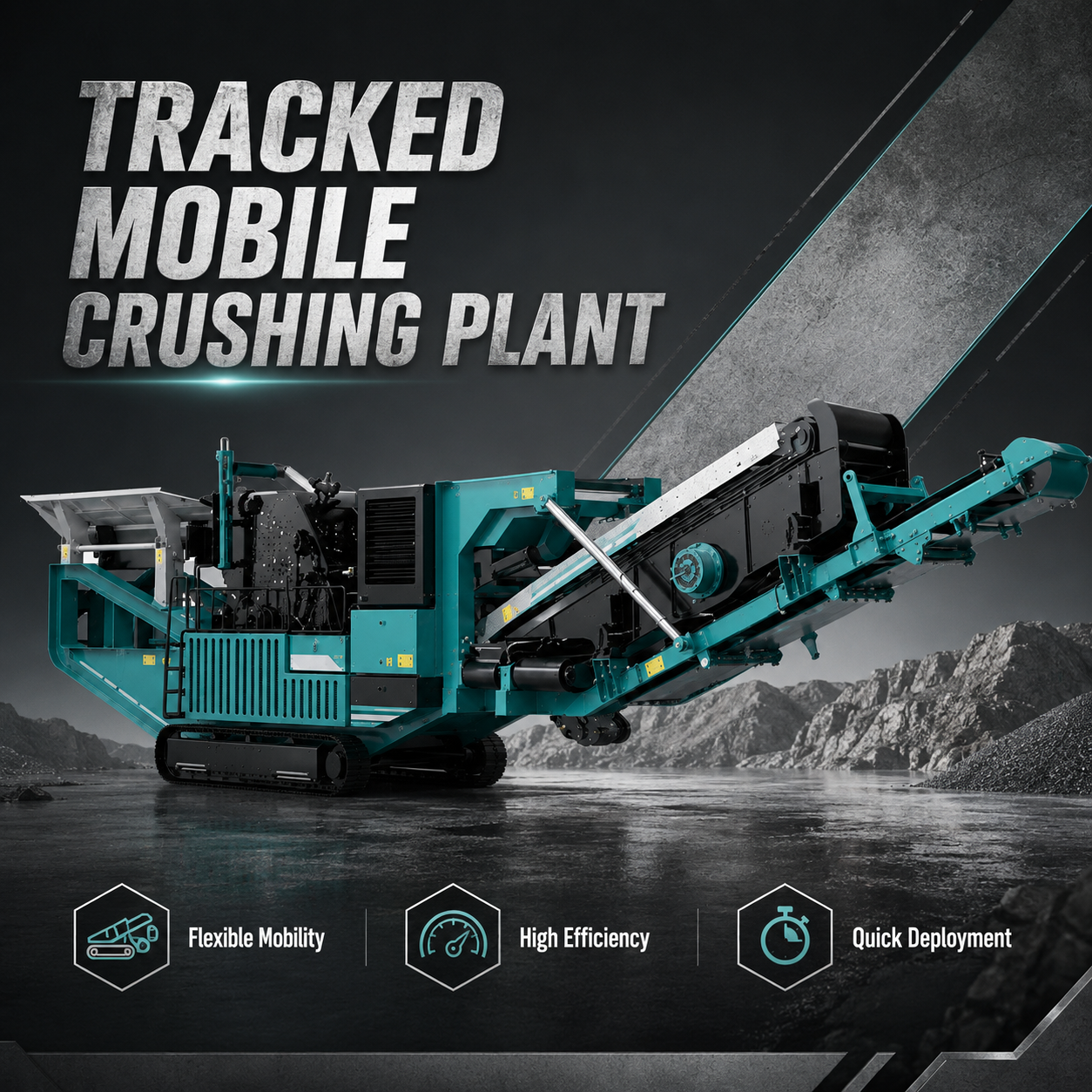
Setting up a mobile crushing station for small quarry operations requires more than selecting a crusher with the right capacity. For quality-control and safety teams, the real work starts before the machine arrives on site: confirming the ground condition, defining material flow, checking guarding and electrical protection, and agreeing on who has authority to stop the plant when conditions are unsafe.
A mobile plant can be installed faster than a fixed line, but “mobile” should not be confused with “informal.” A poorly positioned track-mounted crusher, unstable feeder area, or improvised discharge route can create hazards that are difficult to correct once production pressure begins. The safest setup is one that treats the station as a complete process system, not a single machine parked near a rock pile.
Start With the Quarry Face and Material Flow
Before preparing the pad, inspect the quarry face, haul road, stockpile area, and expected feed material. The location of a mobile crushing station for small quarry sites should reduce unnecessary loader travel while keeping the crusher outside potential fall zones, blast-affected areas, and unstable slopes. In practice, a convenient position is not always a safe position. A station placed too close to the face may shorten loading cycles but can expose operators and service personnel to loose rock or changing ground conditions.
Material characteristics matter as much as the planned output. Wet clay, weathered rock, oversize boulders, and high fines content can change how the feeder, crusher chamber, and screen perform. If the material bridges at the feeder, operators may be tempted to intervene manually. That is exactly the kind of predictable behavior a safety plan should prevent through correct hopper design, controlled feed sizing, and clear lockout procedures.
The process route should be drawn before installation: loading point, primary crushing, screening if used, return flow, finished-product stockpiles, and truck movement. Separate pedestrian paths from loader and truck routes wherever the site allows. Reversing vehicles around a crusher discharge conveyor are a common source of site conflict, especially when dust, noise, or uneven terrain reduces visibility.
Prepare a Stable Working Pad, Not Just a Flat Patch of Ground
A mobile crusher does not normally need a conventional concrete foundation, but it still needs competent bearing ground. The pad should be level within the equipment supplier’s stated limits, compacted as needed, and able to support the machine during operation, maintenance, and loading. Soft shoulders, recently filled ground, hidden voids, and drainage channels deserve particular attention. A plant that looks level at installation can shift after repeated loader movement or heavy rain.
Drainage is easy to overlook in dry weather. Water pooling beneath tracks, wheels, or support legs can undermine the pad and create slip hazards around the machine. Keep runoff away from electrical components, walkways, and service access points. Where dust suppression water is planned, its drainage path should be considered at the same time rather than added later as a hose-and-pump workaround.
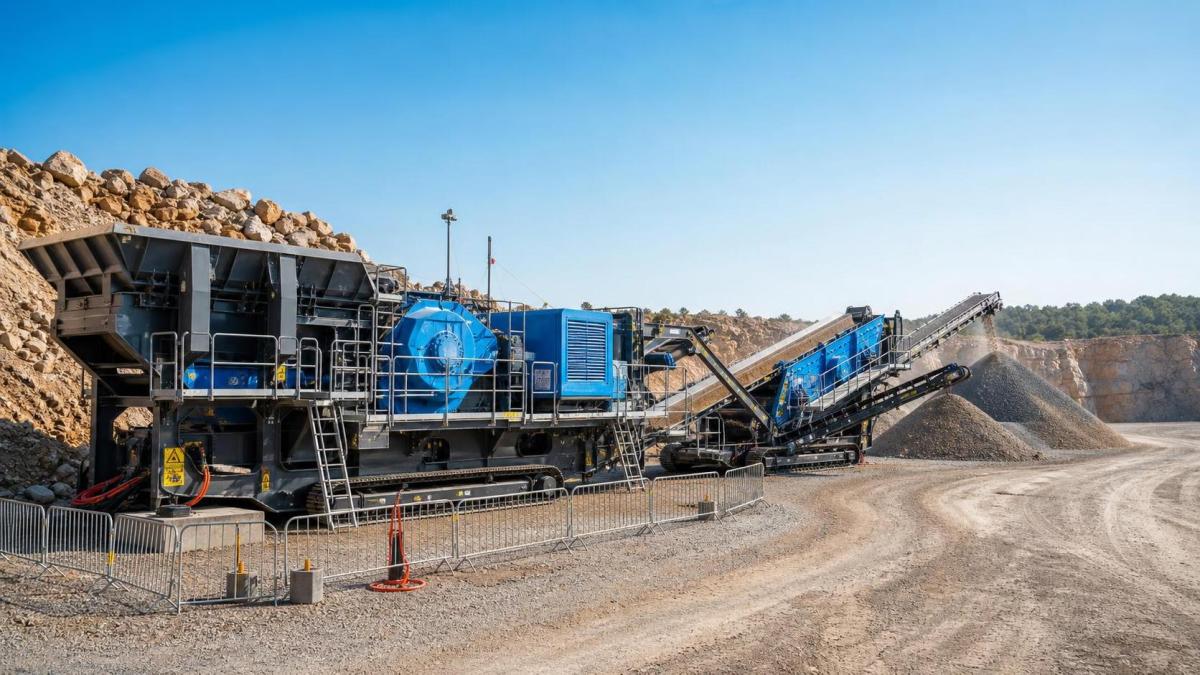
Before energizing the equipment, the QC team should record the installation condition: machine position, conveyor alignment, access clearance, guard condition, cable routing, emergency-stop locations, and visible defects. Photographs and a commissioning checklist are useful because they establish the baseline from which later changes can be assessed. This is especially valuable when a small quarry moves its plant between benches or leases a temporary operating area.
Check the Equipment as a Line, Not as Separate Units
A crusher, feeder, vibrating screen, and conveyors may each pass an individual inspection while the combined line still has unsafe interfaces. Look closely at transfer points, especially where material can spill, where conveyors overlap, or where access platforms are narrow. Guards must cover pinch points, rotating shafts, belts, pulleys, couplings, and other moving parts without preventing necessary inspection or maintenance.
Emergency stops should be reachable from normal operating and maintenance positions. Their function must be tested during commissioning, not assumed from installation. The same applies to warning devices, interlocks, and restart controls. After an emergency stop or power interruption, the station should not restart unexpectedly. The required arrangement depends on the equipment design and local rules, so the supplier documentation and applicable site regulations should be reviewed together.
Electrical work deserves independent attention. Use appropriately rated cables, protection devices, grounding arrangements, and weatherproof connections for the site environment. Cables should not cross vehicle routes unless adequately protected. Temporary electrical installations are often where otherwise disciplined projects become careless. If a cable is repeatedly driven over, dragged through water, or repaired without proper verification, the problem is no longer temporary—it is a known hazard.
Commissioning Should Be Gradual and Documented
Do not begin with full production. Start with a no-load inspection and verify rotation direction, vibration behavior, conveyor tracking, lubrication points, hydraulic connections, and alarm functions. Then introduce material gradually. The first feed should be representative of normal quarry rock, but controlled enough to reveal blockages, abnormal vibration, belt drift, or excessive carryback before the station is heavily loaded.
Quality checks during early runs should include product gradation, visible contamination, screen performance, and the consistency of feed to the crusher. Safety and quality are linked here: an overloaded screen or poorly matched crusher setting can create recirculating loads, spillage, and repeated manual cleanup. Those conditions increase exposure around running equipment.
For projects requiring a coordinated crusher-and-screening arrangement, the equipment selection should be reviewed as a system. A solution such as FEIFAN Professional One-Stop Aggregate Production Line Matching High Performance Mineral Ore Impact Machine may be considered alongside the quarry’s rock type, target aggregate grades, maintenance access, and local electrical conditions. The useful question is not whether one machine is “high performance” in isolation, but whether its operating range fits the entire line safely.
Build Safety Controls Around Real Maintenance Tasks
Most serious exposure does not occur while an operator is standing at a safe control point. It occurs during clearing, adjustment, inspection, screen replacement, belt tracking, and wear-part maintenance. A small quarry should establish a practical isolation procedure covering electrical, hydraulic, pneumatic, and stored mechanical energy. Lockout and verification need to be understood by both operators and maintenance personnel, including contractors.
Do not allow personnel to enter a hopper, crusher chamber, or conveyor transfer area merely because the machine appears stopped. Material can hang up and release suddenly; hydraulic or mechanical energy may remain stored; another person may be unaware that work is in progress. Where access is required, use the site’s formal permit and isolation process, and follow the equipment manufacturer’s maintenance instructions.
Wear monitoring is also a quality-control issue. Worn impact components, crusher liners, screen media, and conveyor parts can gradually change product shape and grading long before a complete failure occurs. Teams that inspect these items on a routine schedule generally have fewer rushed interventions during production. Screen media deserves special attention because incorrect tensioning or damaged panels can affect both separation efficiency and safe operation.
Training Must Match the Actual Quarry Arrangement
Generic induction is not enough. Operators need to know the specific feed limits, emergency-stop locations, exclusion zones, communication method with loader drivers, startup order, shutdown sequence, and conditions that require escalation. A short shift-start inspection is worthwhile when it focuses on what changes: loose guards, blocked chutes, leaking hoses, damaged cables, belt misalignment, poor visibility, or altered ground conditions.
Suppliers with experience in complete aggregate lines can support this stage by providing installation guidance, equipment documentation, and coordinated matching of crushers, screens, conveyors, and screen meshes. For example, manufacturers that combine equipment production with EPC-oriented project support can help identify interface issues earlier. Still, the quarry operator remains responsible for site-specific hazards, local compliance requirements, and daily control of the working area.
A safe mobile crushing station is not defined by how quickly it begins producing. It is defined by whether the plant remains stable, accessible, controllable, and predictable after the first week of dust, rain, changing feed, and routine maintenance. If the setup makes safe work difficult, the layout needs adjustment before production habits make the risk normal.
Leave A Message
If you are interested in our products and want to know more details, please leave a message here, we will reply you as soon as we can.