How to Compare Belt Conveyor Suppliers on More Than Price
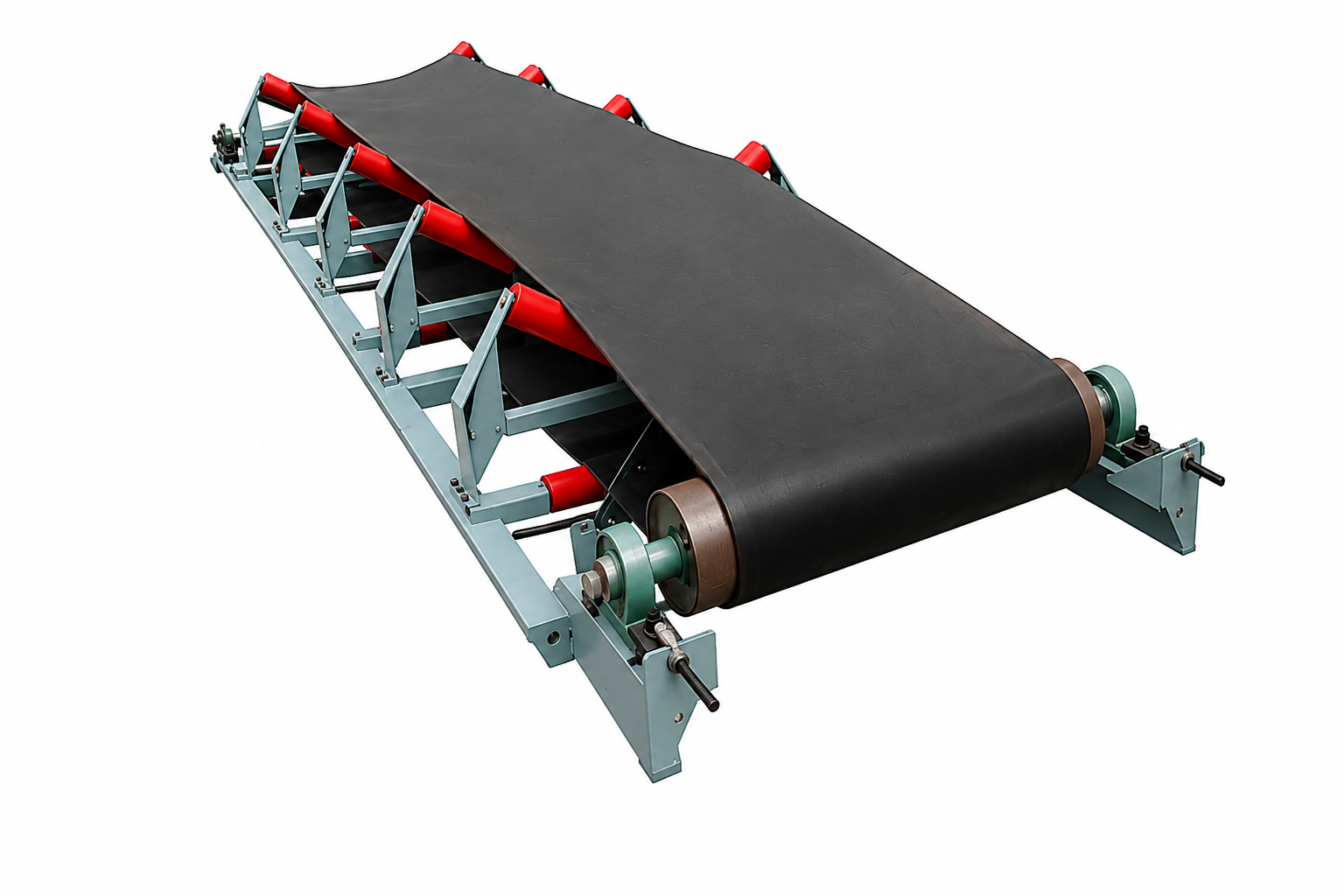
How to Compare Belt Conveyor Suppliers on More Than Price
When evaluating a Belt conveyor supplier, price is only one part of the decision.
Procurement teams also need to compare engineering depth, factory capability, quality systems, and long-term service response.
In mining and aggregates, the wrong supplier can create hidden costs through downtime, rework, and delayed project startup.
A better comparison method looks at the full life cycle of the Belt conveyor, not just the quotation sheet.
Start with the supplier’s real manufacturing strength
A supplier may offer a low price, yet rely heavily on outsourced fabrication and limited process control.
That usually affects consistency, lead time, and how quickly technical issues are resolved.
Check factory size, workforce, welding capacity, machining resources, and assembly lines.
It also helps to confirm whether the supplier builds related equipment in-house.
A group with conveyor, crusher, screen, and EPC experience usually understands full-line coordination better.
What to verify during factory screening
- Workshop area and annual production capacity
- Number of technical engineers and design staff
- Patent portfolio or proven process improvements
- Ability to produce custom frames, idlers, and drive systems
- Experience with mining, aggregates, metallurgy, or infrastructure projects
Compare engineering support, not just equipment dimensions
A Belt conveyor should match material type, capacity target, belt width, incline angle, and site layout.
If a supplier only asks for length and motor power, the evaluation is too shallow.
Strong suppliers ask about lump size, moisture, abrasiveness, transfer points, and operating hours.
They also review the upstream and downstream machines, because line balance affects conveyor performance.
In practical projects, this systems view often matters more than a small difference in unit price.
Questions that reveal engineering depth
- Can they calculate capacity based on bulk density and material condition?
- Can they suggest liner, chute, and dust control improvements?
- Can they adapt the Belt conveyor to uneven terrain or compact plant space?
- Can they coordinate with crushers, screens, feeders, and stockpile systems?
Look closely at quality control and component selection
Many Belt conveyor problems start with ordinary details.
Poor pulley balance, weak welds, inconsistent idlers, or low-grade bearings can shorten service life fast.
Ask for inspection standards, material certificates, and process checkpoints.
The best suppliers can explain how they control alignment, coating quality, and final assembly accuracy.
This becomes even more important in dusty, abrasive, or continuous-duty operating environments.
Review delivery reliability and project execution
Late delivery can erase any savings from a cheaper Belt conveyor quote.
That is especially true when civil work, electrical installation, and commissioning depend on equipment arrival.
Ask suppliers for a realistic production schedule, not a generic promise.
You should also check export packing, documentation support, and overseas shipment experience.
For complete plants, execution experience across multiple machines is a strong signal of reliability.
Some buyers also compare how suppliers present related equipment in integrated solutions.
For example, a line that includes conveyors and crushing units such as FEIFAN Complete Safety Protection Cone Crusher For Urban Building Material Production Workshop Machine often shows whether the supplier understands full process coordination.
Do not underestimate customization and after-sales service
A Belt conveyor rarely works as a pure catalog product in mining applications.
Transfer height, dust enclosure, walkway design, emergency stops, and maintenance access often require adjustment.
This is where customization capability starts to separate serious manufacturers from simple traders.
After-sales support matters just as much.
Check whether the supplier offers installation guidance, spare parts planning, troubleshooting, and remote technical response.
A fast answer during commissioning can save far more than the original price gap.
Useful service checkpoints
- Clear spare parts list before shipment
- Technical manuals and wiring or layout support
- Response time commitment for service requests
- Ability to support future capacity expansion
Use a total-value comparison method
A disciplined supplier review should score more than price.
Use a simple matrix covering technical fit, quality control, lead time, customization, service, and export capability.
This makes Belt conveyor sourcing more objective and easier to defend internally.
From a long-term view, the best supplier is the one that lowers operating risk and supports stable output.
That is why experienced buyers look beyond the quote and evaluate the partner behind the machine.
If a supplier can show manufacturing depth, engineering understanding, and dependable service, the Belt conveyor investment is far more likely to perform as expected.
Leave A Message
If you are interested in our products and want to know more details, please leave a message here, we will reply you as soon as we can.