Can polyurethane screen mesh reduce noise compared with steel mesh?
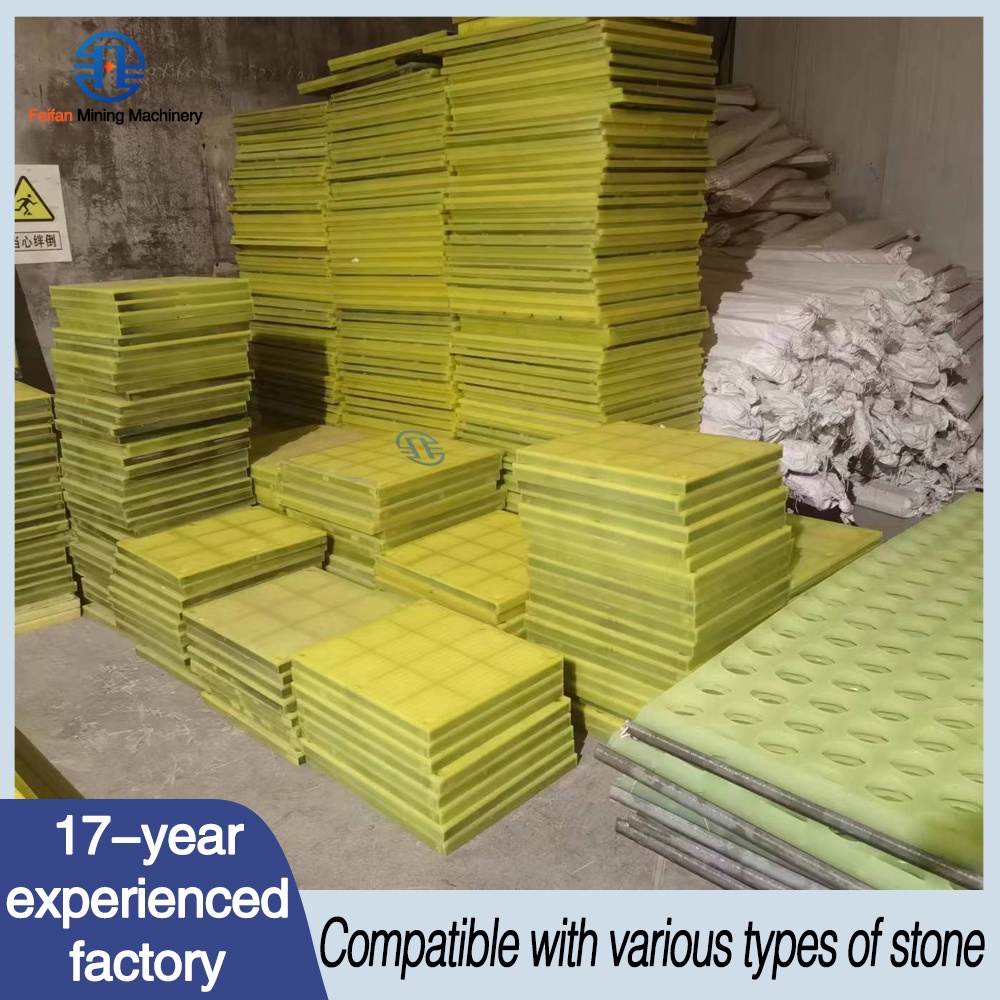
Yes, polyurethane screen mesh can reduce noise compared with steel mesh, particularly where aggregate striking the screening surface produces sharp impacts and metallic ringing. Its resilient surface absorbs part of the impact energy rather than transmitting it as readily through a rigid metal deck. However, there is no universal noise reduction value: the result depends on the material, screen construction, mounting arrangement, and other noise sources around the machine.
On an aggregate screening line, this distinction matters when operators work beside a loud vibrating screen but production cannot tolerate a loss of grading accuracy or capacity. Replacing the mesh may soften the impact sound while leaving motor, bearing, chute, or structural noise largely unchanged. The useful decision is therefore not simply whether polyurethane sounds quieter, but whether it reduces exposure at occupied positions while maintaining acceptable screening performance.
Separate deck impact noise from machine noise
Steel screening media can generate noise as particles strike the wires or plates. The media and supporting components may also vibrate and radiate sound. Loose fasteners, worn supports, and incorrectly tensioned screens can add rattling that is sometimes mistaken for an unavoidable property of steel.
Polyurethane provides a more compliant contact surface and greater material damping than steel. This can reduce sharp impact sounds and ringing. It does not eliminate the energy generated by the vibrating mechanism, nor does it repair mechanical looseness.
Before specifying replacement media, identify the dominant sources during normal operation:
- Impacts across the active deck: a promising target for a media change, especially when the sound follows feed loading.
- Noise concentrated at the feed box or discharge: inspect drop height, chute design, and lining condition; changing the screening surface alone may have limited effect.
- Rattling at panel joints or supports: check retention systems, wear, and fit before attributing the problem to media material.
- Persistent mechanical noise: investigate bearings, drive components, guards, and structural connections through the appropriate maintenance procedure.
Observations with and without feed can help distinguish material impact from mechanical noise, provided operation without feed is permitted by the equipment manufacturer. Make observations from safe positions; do not approach moving components to locate a sound.
Conditions that change the acoustic benefit
Coarse, hard particles falling onto a deck create different impacts from fine material moving in a shallow bed. Feed drop height, particle shape, moisture, and bed depth all influence how much impact energy reaches the media. A material bed may cushion impacts, but increasing bed depth deliberately is not a reliable noise-control measure: it can interfere with stratification and separation.
The polyurethane panel itself also matters. Hardness, thickness, reinforcement, aperture geometry, and support spacing affect its flexibility and vibration response. Two polyurethane products with the same nominal opening size need not behave alike acoustically or mechanically.
Installation can undermine the expected benefit. Poorly seated panels, damaged locking components, or movement against steel supports may introduce new noise. A quieter contact surface cannot compensate for loose hardware elsewhere on the deck.
Surrounding equipment sets another limit. Where crushers, transfer points, and conveyors dominate the sound at an operator station, a meaningful reduction at the screen surface may produce only a small change at that station. Evaluate the worker’s position as well as the machine itself.
Compare separation performance before approving a quieter deck
Polyurethane and steel media should not be treated as interchangeable solely because their nominal apertures match. Wire diameter, panel ribs, aperture profile, and thickness can change effective open area and the way near-size particles pass through.
A surface that sounds quieter because it is processing less material is not evidence of a successful replacement. Record throughput and product quality alongside every acoustic comparison. Where the new media changes machine loading or motion, obtain the screen manufacturer’s approval rather than adjusting operating settings by trial and error.
Run a controlled comparison on the operating line
A useful trial starts with agreed acceptance criteria. Define the measurement positions, representative production conditions, required product grading, and minimum acceptable throughput before changing the deck. Avoid selecting criteria after hearing the replacement run.
- Establish a sound baseline. Inspect the steel media and correct abnormal looseness or mechanical defects. Record feed rate, material size distribution, moisture, screen settings, and nearby equipment status. Comparing new polyurethane against damaged steel can overstate the material benefit.
- Measure consistently. Use a suitable calibrated sound level meter, verify calibration before and after measurements, and record A-weighted equivalent sound levels over representative operating periods. Keep microphone positions, heights, measurement durations, and production conditions consistent.
- Install the proposed configuration safely. Isolate and lock out the equipment before replacement or internal inspection. Confirm panel seating, retention, support condition, clearances, and compatibility with the machine.
- Repeat under matched conditions. Measure at the same locations and record any changes in feed, background noise, or operating state. Repeat observations to distinguish a stable difference from normal process variation.
- Check production and wear. Compare throughput, product size distributions, blockage, panel movement, and early wear. Continue observation long enough to capture typical feed variation rather than relying only on the first run.
Decibels are logarithmic, so do not describe the difference between two readings as a simple percentage reduction in noise. A small apparent improvement may also be difficult to distinguish from measurement uncertainty or changing background conditions. Where nearby sources dominate, specialist acoustic assessment may be needed to isolate the screen’s contribution.
Decide what the result means for worker exposure
A lower sound level beside the screen does not automatically establish acceptable daily exposure. Workers may spend time near several machines, and maintenance tasks may involve different positions and durations. Personal noise dosimetry or a task-based exposure assessment may therefore be needed in addition to fixed-position measurements.
Keep existing hearing protection and access controls in place until the revised exposure assessment supports a change under applicable requirements. A less harsh sound can feel substantially better without producing an equivalent reduction in measured exposure.
Polyurethane is a strong candidate when deck impacts contribute materially to the noise, the proposed media fits the screen, and a representative trial confirms both acoustic improvement and production performance. If those conditions are not met, address the dominant source instead: repair loose components, reduce avoidable transfer impacts, or assess suitable acoustic treatment without obstructing maintenance access or ventilation.
For a defensible purchase decision, request the proposed aperture geometry, effective open area, hardness, panel mass, mounting details, and duty limitations from the supplier. Treat any noise reduction claim as something to verify on the intended machine—not as a guaranteed property of polyurethane alone.
Leave A Message
If you are interested in our products and want to know more details, please leave a message here, we will reply you as soon as we can.