How screen inclination changes vibrating screen performance
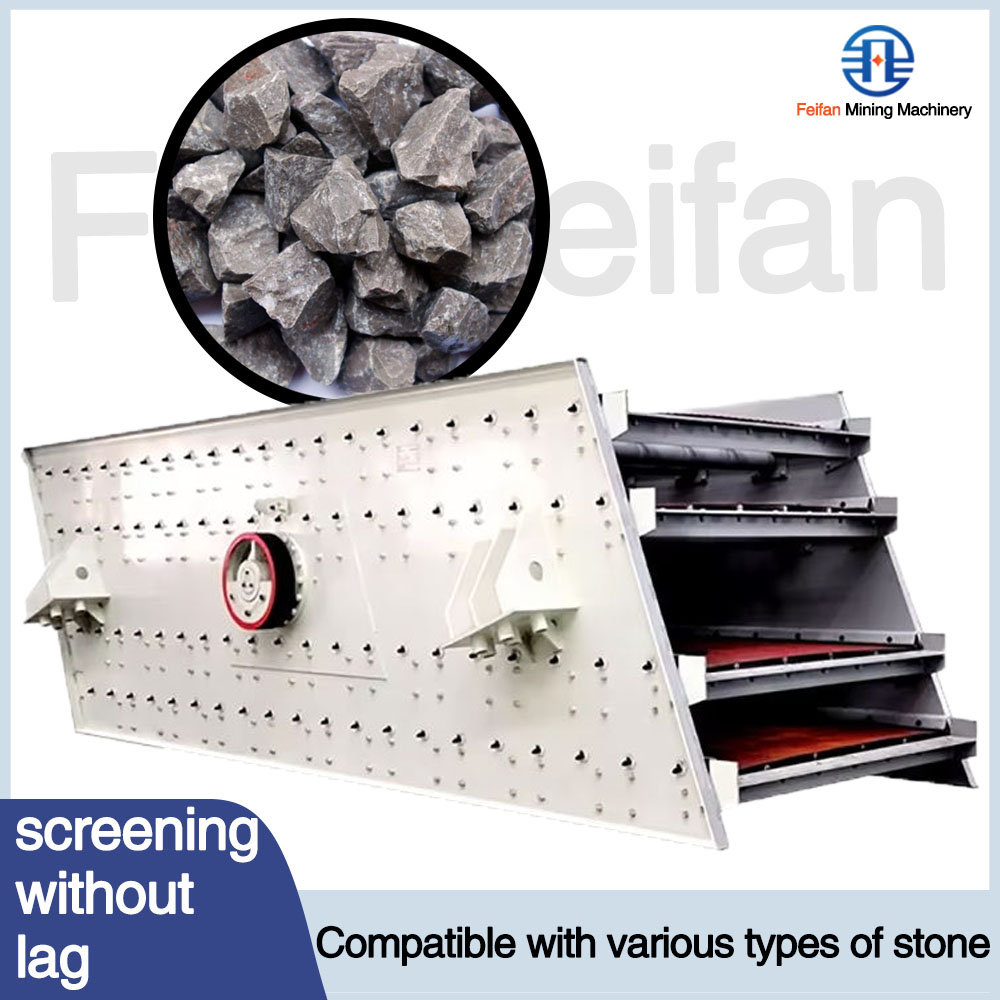
Screen inclination is one of the fastest ways to change Vibrating Screen performance without replacing the machine. A steeper deck usually moves material faster and raises throughput, but it can reduce the time particles have to find an opening. A flatter deck slows the material bed and can improve separation, yet it may create overload, blinding, or carryover when the feed is wet or poorly distributed.
The useful question is not “What is the best screen angle?” There is no single answer. The right inclination depends on the material size range, moisture, clay content, target cut size, feed rate, screen motion, and the quality required by the next stage of the plant.
How Inclination Changes a Vibrating Screen
Inclination adds gravity-driven movement to the vibration already created by the exciter. When the deck angle increases, material travels toward the discharge end more quickly. When the angle decreases, material remains on the deck longer.
That residence time is central to screening. Each particle needs repeated opportunities to contact an opening. Fine particles need even more opportunity because they must pass through a smaller aperture, often while moving beneath larger particles. If material leaves the deck too quickly, near-size particles can report to the oversize stream even though they should have passed. This reduces screening efficiency and may overload a downstream crusher or contaminate a finished aggregate product.
A practical rule is simple: use a steeper inclination when the priority is moving relatively dry, easy-to-screen material; use a flatter inclination when separation quality is the limiting factor. The rule has exceptions, especially with sticky feed, but it is a sound starting point for troubleshooting.
What Happens at a Steeper Screen Angle?
A steep deck can help when a screen is carrying a large volume of coarse crushed stone. Material clears the upper part of the deck faster, which can prevent a deep bed from building near the feed box. This may improve capacity and reduce the risk of material spilling over side plates.
It is often useful after the primary crusher, where the main goal may be scalping oversize or removing fines before a secondary crusher. In this situation, keeping material moving can be more valuable than pursuing the highest possible fine separation efficiency.
There is a cost. Faster travel reduces the number of chances for undersize to pass. Operators may see more usable material in the oversize discharge, especially when the screen aperture is close to the feed particle size. A steep angle can also make poor feed distribution more obvious: material may rush down one side of the deck while other areas receive little use.
Do not try to solve every capacity problem by increasing inclination. If the deck is already overloaded because of an excessive feed rate, a worn screen mesh, or a blocked aperture, making the screen steeper may simply push unscreened material out faster.
Why a Flatter Deck Can Improve Separation
Reducing inclination usually slows material transport and spreads the work over a longer section of the deck. This can improve the probability that undersize particles pass through, particularly on the lower decks where product sizing matters most.
This adjustment is commonly considered when a plant is producing a specification-sensitive aggregate, manufactured sand fraction, or mineral product and test results show too much fine material in the oversize stream. It can also help when the screen appears underused at the discharge end: material may be leaving before enough separation has occurred.
But a flatter deck is not automatically “more accurate.” Slow-moving material can form a thick bed. Fine particles become trapped under coarse particles, openings become covered, and the screen loses effective open area. Wet sand, clay-bearing feed, and flaky particles make this effect worse. At that point, the problem is not insufficient residence time; it is poor stratification and restricted passage through the mesh.
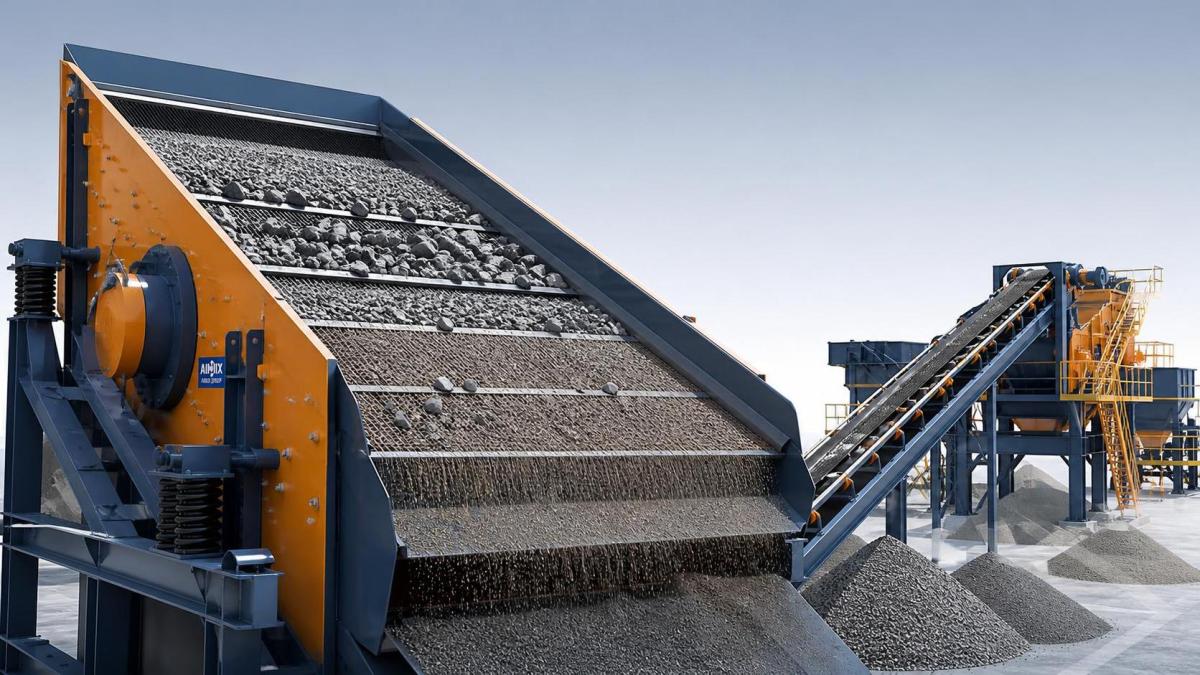
Watch the material across the whole deck. A healthy bed should be active and reasonably even, with particles stratifying rather than sliding as one heavy layer. If the material looks packed, dull, or slow to advance at the discharge end, the deck may be too flat, the feed may be too high, or the vibration setting may need inspection.
Inclination Is Only One Part of the Screening System
Many performance complaints are blamed on angle when the actual cause sits upstream or on the screen media. Feed distribution matters first. A screen receiving most material on the center or one side cannot use its full available area. Before changing the deck angle, check the chute, feed box, and loading pattern.
Screen media condition matters just as much. Worn apertures can allow oversize particles to pass, while blocked or blinded openings reduce capacity and send good material to the wrong discharge. Media with unsuitable wire diameter, opening shape, tension, or panel layout may limit performance even at a well-chosen inclination.
For operations needing non-standard apertures or panels matched to an existing deck, an OEM custom size circular stone sand sieve crusher screen mesh vibrating screen mesh may be worth evaluating. The key point is fit, opening accuracy, wear requirement, and material behavior, not simply choosing a mesh because it appears to offer more open area.
Stroke, speed, throw direction, and vibration amplitude also change how material moves. A flatter screen with strong forward transport may still discharge material quickly. A steeper screen with different motion can behave more gently than expected. Adjustments should therefore be made within the equipment manufacturer’s approved range and with the machine safely isolated before any mechanical work.
A Controlled Way to Adjust the Angle
Changing several variables at once makes diagnosis difficult. Make one controlled adjustment, then observe the result over a representative production period. Do not judge the screen during a short interval when feed moisture or crusher output has changed.
Start by recording the current conditions: feed rate, moisture appearance, deck aperture, product gradation results, motor current where relevant, and the visual material pattern on each deck. Then change inclination in a small, permitted increment. Compare both tonnage and product quality. More tonnes per hour are not a gain if the downstream crusher is receiving excess fines or the finished product falls outside specification.
When evaluating the result, pay attention to three locations:
- Feed end: A deep, compact bed indicates poor distribution, excessive feed, or insufficient transport.
- Middle of the deck: This area should show active stratification. Persistent clumps often point to moisture, clay, or blinding rather than angle alone.
- Discharge end: If the final section does little work, material may be moving too fast. If it remains heavily loaded, the screen may lack capacity or be set too flat.
For wet or sticky material, changing angle may provide only limited improvement. Wash water, dewatering arrangements, anti-blinding media, a different aperture design, or upstream removal of clay may be the more effective response. An angle adjustment cannot turn unsuitable feed conditions into clean, free-flowing material.
Common Mistakes That Reduce Screening Results
One common mistake is chasing capacity after a crusher setting change without checking the actual particle-size distribution. A crusher producing more near-size material can sharply increase the screening load even when total tonnes per hour remain similar. The screen may then appear inefficient, although its duty has changed.
Another is using a single angle for every deck and every product target. A scalping deck, a sizing deck, and a dewatering screen have different jobs. The most appropriate setup must follow the screen design and process role.
Operators should also avoid adjusting inclination to compensate for damaged bearings, loose mesh, cracked side plates, weak spring support, or incorrect rotation direction. These faults alter vibration behavior and can create misleading symptoms. Mechanical inspection comes before repeated process adjustments.
Choose the Setting Based on the Plant Goal
If the plant needs higher transport speed for coarse, dry material, a steeper permitted angle may be appropriate. If the priority is recovering more undersize through a fine sizing deck, a flatter setting may help, provided the bed remains mobile and the apertures stay open. When feed is wet, clayey, or inconsistent, first focus on feed preparation and screen media performance.
Plants that combine crushers, screens, conveyors, and custom mesh benefit from looking at the full process rather than treating the screen as an isolated machine. Manufacturers with experience in complete aggregate systems, including screen media and screening equipment, can help identify whether the real restriction is angle, feed distribution, mesh selection, or upstream crushing conditions.
The best Vibrating Screen inclination is the one that produces the required gradation at a stable rate, without excessive carryover, blinding, or unnecessary load on downstream equipment. Measure the result, make one adjustment at a time, and let the material behavior decide.
Questions Operators Often Ask
Should I make the screen steeper when it is overloaded?
Not immediately. First confirm the feed rate, material distribution, mesh condition, and moisture. A steeper deck may clear material faster, but it can also increase undersize carryover in the oversize discharge.
Why does my screen have good capacity but poor product quality?
Material may be traveling too quickly, especially when the deck is steep or the motion provides strong forward transport. Check gradation on both discharge streams before changing settings.
Can inclination solve mesh blinding?
Sometimes it changes material movement enough to help, but blinding is often caused by moisture, clay, near-size particles, or unsuitable media. Inspect the openings and feed condition before relying on angle changes.
How often should the screen angle be adjusted?
Only when the feed, product target, or operating problem has changed. Frequent unmeasured adjustments make stable operation harder to achieve.
Leave A Message
If you are interested in our products and want to know more details, please leave a message here, we will reply you as soon as we can.