How polyurethane screen mesh improves wear life in abrasive screening
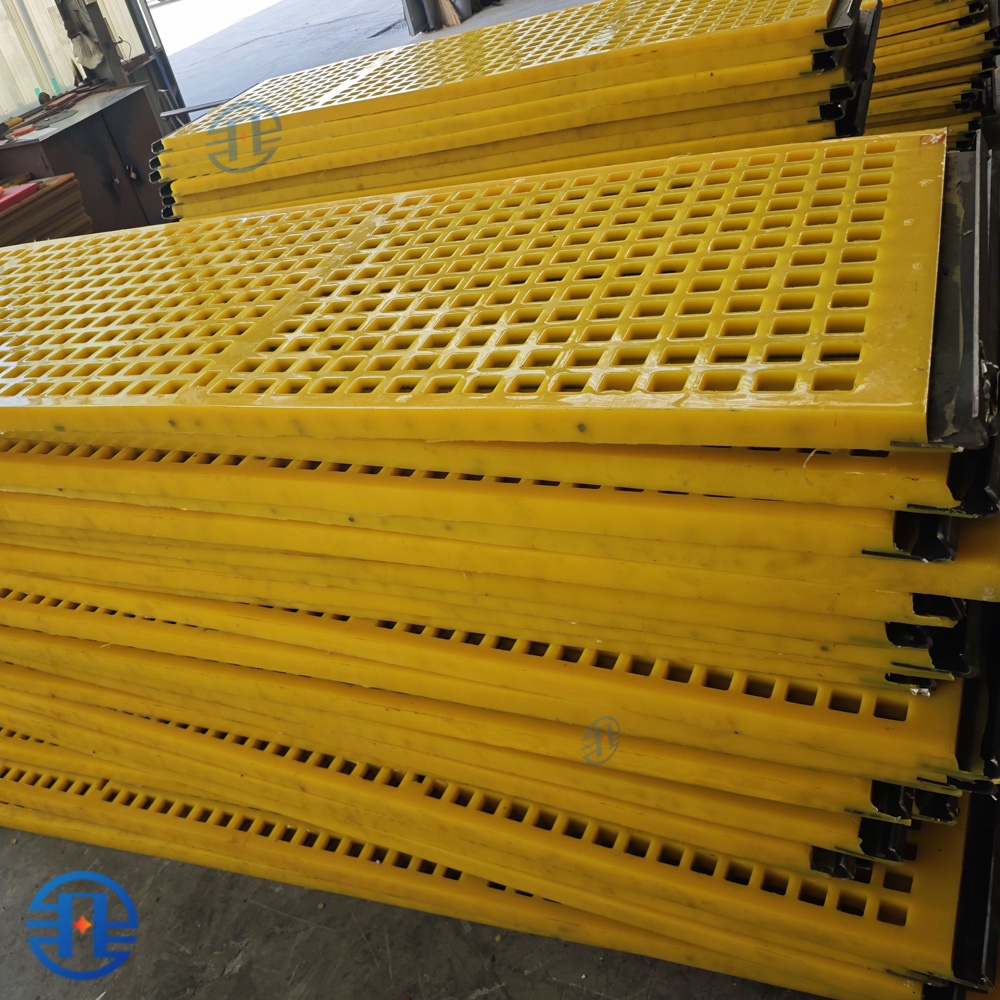
In abrasive screening applications, premature panel wear can quietly erode plant performance long before a screen deck visibly fails. Frequent shutdowns, drifting cut sizes, blocked apertures, and rising maintenance labor are familiar signals to technical evaluators in mining and aggregate operations. Polyurethane Screen Mesh addresses these issues by combining abrasion resistance with elastic impact absorption and controlled aperture geometry. The result is not simply a tougher panel, but a screening surface designed to remain functional as material conditions become more demanding.
For plants processing crushed granite, basalt, iron ore, recycled aggregates, or sharp manufactured sand, the question is rarely whether screening media will wear. The more useful question is how it wears, how quickly its openings change, and whether the panel can keep delivering the required separation efficiency throughout its service interval.
Wear life is more than material hardness
Steel screen media has long been valued for strength and open area, yet hard and angular feed can gradually cut wires, enlarge openings, and create local weak points. Polyurethane behaves differently. Its polymer structure provides a resilient surface that flexes under impact and recovers after particles pass. Rather than concentrating all impact energy at a rigid contact point, the panel dissipates part of that energy through elastic deformation.
This is particularly valuable on the feed end of a vibrating screen, where coarse material lands with high velocity and uneven loading. In these zones, wear is often caused by repeated impact combined with sliding abrasion. A properly formulated polyurethane panel can resist both mechanisms: the surface resists cutting by angular particles, while its elasticity reduces the brittle-type damage associated with repeated shock.
That does not mean every polyurethane panel will automatically outlast every steel screen. Wear life depends on urethane formulation, panel thickness, aperture design, fastening method, vibration conditions, feed characteristics, and deck position. Technical selection should therefore focus on the complete operating system rather than on a single material claim.
Why elastic recovery matters during screening
The screening process is dynamic. Material strikes the deck, stratifies, tumbles, and repeatedly contacts aperture edges. A rigid opening may retain particles that are close to the nominal cut size, especially when moisture, clay, or flaky particles are present. Polyurethane apertures can flex slightly during vibration, creating a self-cleaning effect that helps release near-size particles and reduce pegging.
This controlled flexibility has two practical wear-life benefits. First, fewer trapped particles means less abrasive rubbing around aperture edges. Second, the panel is less likely to suffer the concentrated load created when wedged material is repeatedly struck by incoming feed. In fine and medium screening duties, these effects can be as important as the polymer’s inherent abrasion resistance.
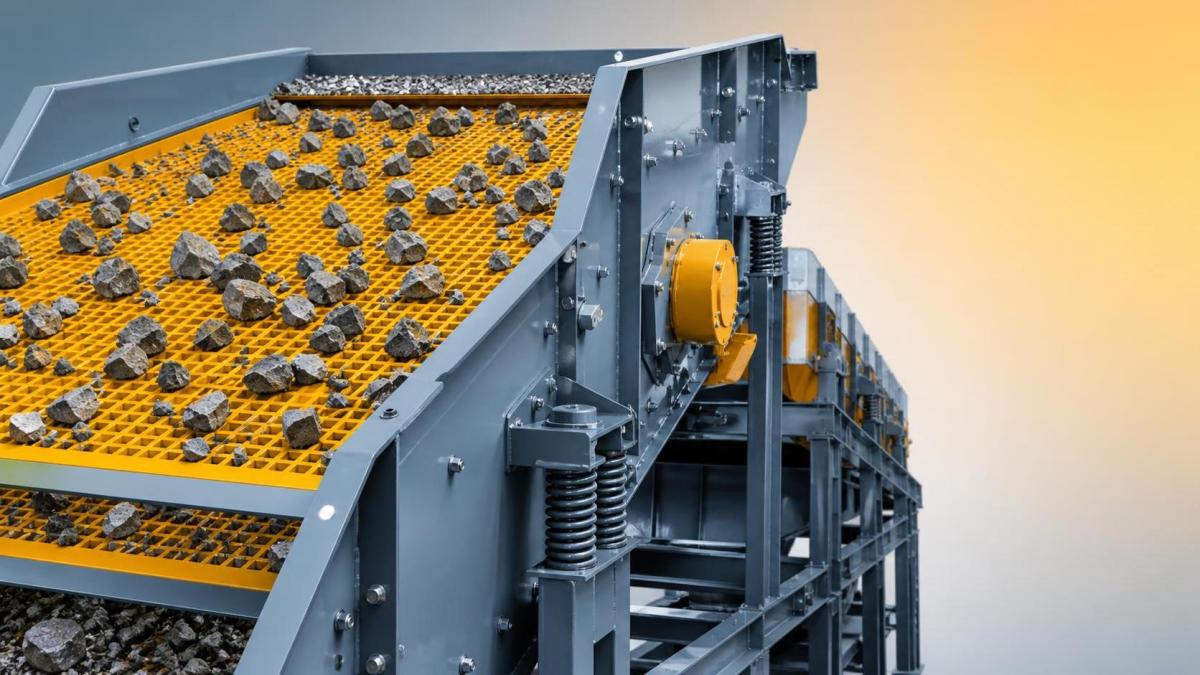
Aperture geometry should still be specified carefully. Square, rectangular, slotted, and elongated openings each influence capacity, product shape, and anti-blinding behavior. Where accurate classification is critical, evaluators should check not only the stated aperture size but also dimensional consistency across the panel and expected aperture retention over time. A screen that lasts longer but loses cut-point control is not necessarily a better economic choice.
How Polyurethane Screen Mesh responds to common abrasive conditions
Coarse crushed aggregate
Large, sharp aggregate produces impact at the feed zone and sliding wear farther down the deck. Modular polyurethane panels with reinforced frames or embedded support elements are often selected where the deck must tolerate uneven loading. Thickness and support-bar spacing need to match the screen design; insufficient support can allow excess deflection, while unnecessary thickness may reduce open area and throughput.
Fine sand and manufactured sand
Fine particles create a different wear pattern. Instead of isolated impact damage, the panel is exposed to sustained rubbing and high particle contact frequency. Here, smooth molded surfaces and stable apertures help maintain separation. Narrow slots may improve capacity for elongated material, but they require attention to blinding risk, particularly when moisture or clay contamination increases.
Wet, sticky, or clay-bearing feed
Moisture changes the screening problem. Material can smear across the deck, bridge apertures, and create dead zones that accelerate localized wear. Polyurethane’s flexible opening action can improve release, but it should be paired with suitable vibration parameters, spray-water arrangement where applicable, and an aperture pattern that suits the feed gradation.
The same principle extends beyond the screen deck. In aggregate washing circuits, replaceable polyurethane wear components can protect equipment exposed to abrasive slurry and sticky solids. For operations reviewing connected wear points, the high moisture anti clog split PU wear liner spiral sand washer spare parts sticky ore aggregate washing component illustrates how split polyurethane protection can be considered alongside screening media in a broader maintenance strategy.
The variables that determine actual service life
When comparing quotations or trial panels, service life should not be evaluated by material name alone. A useful technical review includes the following factors:
- Feed particle size and drop height: Coarse feed falling directly onto a panel requires greater impact resistance than material already distributed across the deck.
- Abrasiveness and particle shape: Angular quartz-rich sand and freshly crushed rock generally cut more aggressively than rounded material.
- Moisture and clay content: These affect blinding, adhesion, and the amount of abrasive material retained on the surface.
- Screen motion: Stroke, frequency, and inclination determine how material moves and where concentrated wear develops.
- Panel installation: Loose or poorly supported panels can move against support rails, causing premature damage at fastening points.
- Deck zoning: A uniform screen-media specification across all deck areas may be convenient, but different zones often face different failure mechanisms.
Deck zoning is especially worth considering. The feed end may need a more impact-tolerant configuration, while the discharge end may benefit from a design with higher effective open area. This approach can reduce unnecessary material cost without exposing the most heavily loaded zone to an unsuitable panel.
What to verify before approving a panel design
Technical evaluators should ask for a drawing or specification that clearly identifies panel dimensions, aperture type, aperture size, thickness, fastening arrangement, and recommended support-bar spacing. If the screen deck uses rails, bolts, or modular adapters, compatibility should be confirmed before delivery. A nominally correct panel can still perform poorly when its locking method permits movement under vibration.
It is also wise to inspect the operating screen rather than treating media selection as an isolated procurement task. Worn support bars, damaged rubber strips, poor feed distribution, and excessive vibration amplitude can shorten the life of any screening surface. In many cases, a panel failure reveals a deck condition problem rather than a material defect.
For new lines, matching the screen media to the equipment supplier’s process design is preferable to selecting panels only after commissioning. Manufacturers that work across crushers, vibrating screens, conveyors, and custom screen meshes can evaluate the interaction between feed preparation, deck loading, and final classification. This is relevant for turnkey aggregate projects, where screen performance affects the balance of the entire production line.
A practical standard for comparing alternatives
A sound comparison should measure usable screening life, not merely calendar time between replacements. Record operating hours, tonnage processed, percentage of blocked or damaged apertures, product gradation results, downtime required for changeout, and the condition of the panel at removal. Comparing cost per processed tonne is usually more meaningful than comparing purchase price per panel.
Polyurethane Screen Mesh is most compelling when abrasive wear, impact, pegging, or wet-screening instability has become a recurring operational cost. Its value comes from maintaining a stable working surface for longer, not from eliminating maintenance altogether. With the right aperture pattern, support arrangement, and deck-zone selection, polyurethane media can help a screening circuit run with fewer interruptions and more consistent separation performance under abrasive conditions.
Leave A Message
If you are interested in our products and want to know more details, please leave a message here, we will reply you as soon as we can.