How Circular Vibrating Screens Separate Crushed Stone by Size
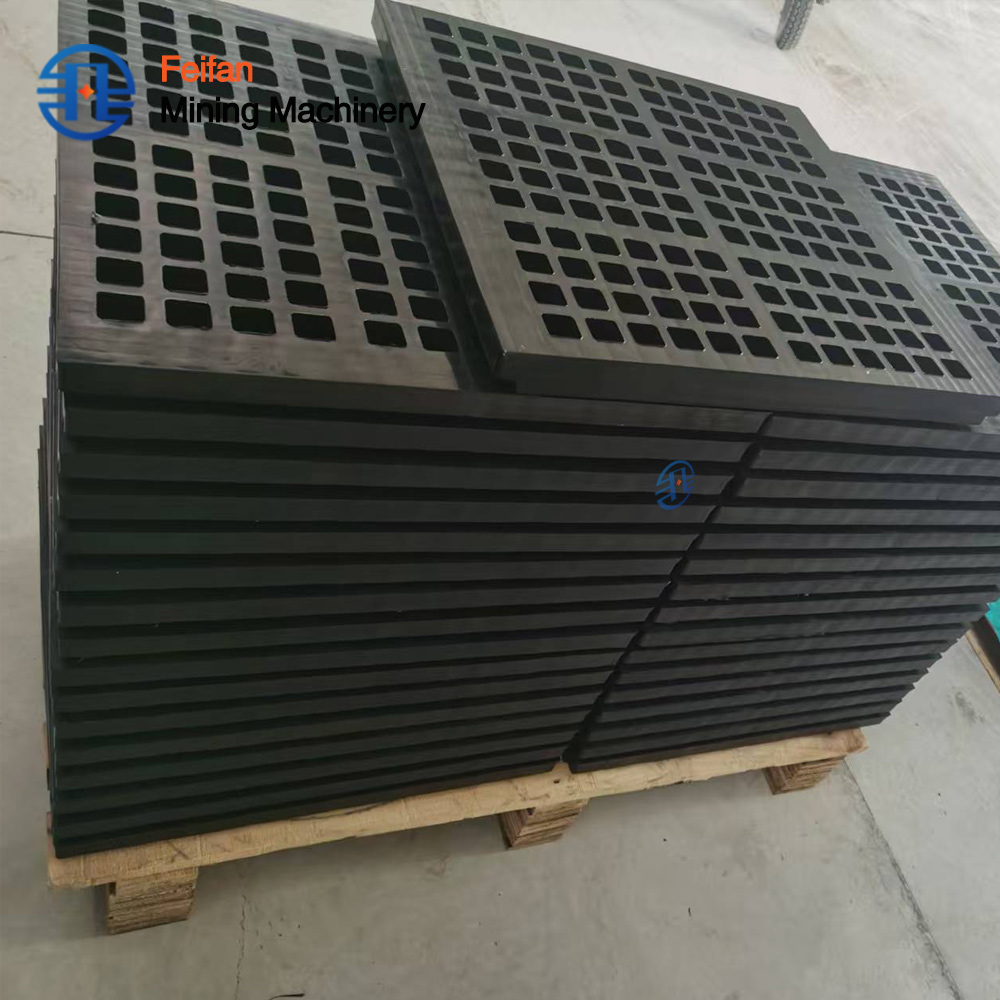
A Circular Vibrating Screen separates crushed stone by moving it across inclined decks with selected openings. Circular vibration loosens and stratifies the feed: smaller particles move toward the screening surface and pass through, while larger particles remain on the deck and travel to its discharge end.
The opening size sets the nominal separation point, but it does not guarantee an exact cut. Feed rate, particle shape, moisture, deck inclination, vibration and screen-media condition all affect the proportion of correctly classified stone in each product.
How a Circular Vibrating Screen creates size fractions
An eccentric drive produces an approximately circular motion in the screen box. As the box vibrates, particles are repeatedly lifted, rearranged and conveyed down the inclined deck. The movement gives smaller particles opportunities to reach an opening, while larger pieces tend to remain above the screening surface.
Two actions must occur for a particle to pass: it must reach the screen surface, and it must encounter an opening in an orientation that allows passage. A particle much smaller than the opening has many opportunities to pass. A near-size particle, close to the opening dimension, is harder to classify and may leave with the oversize even when it could theoretically pass.
With multiple decks, the coarsest openings are generally placed on the upper deck. Material retained there forms the largest product; material passing through is presented to lower decks with smaller openings. Each deck therefore protects the next from part of the coarse load, but every deck must still have enough effective area for its assigned duty.
Opening size is not the same as product size
A screen opening is a geometric threshold, not a precise measurement of every stone’s maximum dimension. Elongated or flat particles can pass through when favorably oriented, while near-size particles can be carried over without passing. The resulting product has a size distribution rather than a perfectly sharp boundary.
For example, in a hypothetical circuit using a 10 mm square opening, the material passing the deck is described as a nominally undersize fraction. Its grading still needs verification by sampling and laboratory sieving; the deck opening alone does not establish compliance with a product specification.
Specify whether an opening dimension refers to the clear aperture of new media and identify its shape. Woven wire, polyurethane panels and other media can differ in aperture geometry, open area and wear behavior even when their nominal openings are the same.
Variables that govern separation performance
Capacity and accuracy are coupled. Increasing feed can raise throughput until the material bed becomes too deep for adequate stratification and passage. Reducing the load may improve classification, but it also reduces the tonnage processed; the acceptable operating point depends on the product grading and plant flow requirements.
Screen media and deck configuration
Woven wire media provides openings with relatively high available screening area, but abrasive stone and impact can shorten its service life. Polyurethane media can offer abrasion resistance and replaceable modular panels, although panel geometry and thickness can reduce available open area compared with a wire surface of the same nominal aperture.
Blinding occurs when openings become covered or blocked by material; pegging occurs when particles lodge in individual apertures. Media selection should account for these failure modes, as well as maximum lump size, drop height and ease of replacement. Changing media type without checking open area and support compatibility can alter capacity even if the nominal opening remains unchanged.
Deck length provides opportunities for particles to pass, while deck width affects how much feed can be distributed across the surface. A long deck cannot compensate reliably for a concentrated feed stream or an overloaded inlet. Transfer chutes and feed boxes should distribute material evenly and limit unnecessary impact on the first part of the deck.
Wet screening and downstream washing
When clay or adhering fines interfere with separation, water sprays can help disperse and transport fine material through the openings. Wet screening also creates a slurry stream, so pumps, drainage, water supply and fines recovery must be assessed as part of the circuit rather than as screen accessories alone.
A wheel sand washer is a different unit operation from a sizing screen: it is used to wash and dewater a sand stream, not to replace the screen’s deck-by-deck classification of crushed stone. Where the circuit includes sand washing, an example of the equipment category is the OEM Wide Application Range Wheel Sand Washer For Mine Quarry River Sand Lake Sand Processing Wheel Sand Washer. Its suitability depends on the incoming sand grading, contaminants, water balance and required product condition.
Verifying a screen against the duty
A defensible assessment starts with the feed grading, bulk density, moisture condition, required product fractions and design throughput. It should also define the permissible misplaced material in each product, including undersize carried into oversize and oversize reporting to undersize.
During commissioning or a performance test, collect representative, concurrent samples of the feed and relevant discharge streams under stable operating conditions. Sieve the samples using the test method specified for the project, record the actual feed rate and operating settings, and compare results with the agreed acceptance criteria. Screening efficiency should be interpreted alongside product grading and mass balance, not as a stand-alone capacity figure.
Finally, inspect vibration settings, deck condition, media wear and support components as part of routine operation. Worn or damaged openings can change product grading, while persistent blinding or uneven material flow can indicate that the original feed assumptions or media selection no longer match the duty.
Leave A Message
If you are interested in our products and want to know more details, please leave a message here, we will reply you as soon as we can.