Calculating the Operating Cost of a Vertical Shaft Impact Crusher Plant
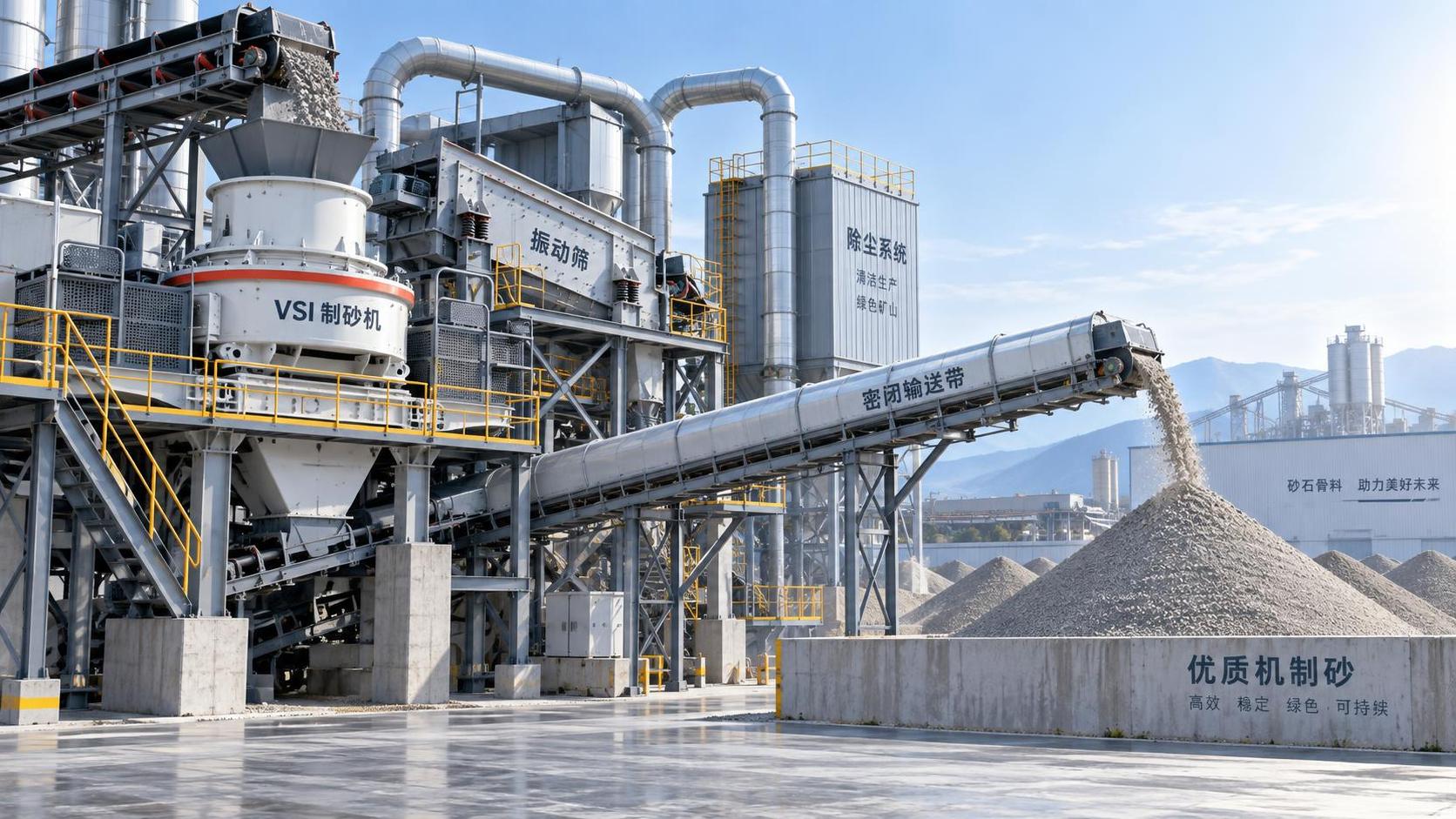
Calculating the Operating Cost of a Vertical Shaft Impact Crusher Plant
Calculating the operating cost of a Vertical Shaft Impact Crusher plant is less about finding one “cost per ton” number and more about understanding what sits behind it. A VSI may be purchased to produce manufactured sand, improve aggregate shape, or reduce the percentage of elongated particles before concrete or asphalt use. In each case, the machine can be commercially valuable—but only if the plant is designed around the feed material, target gradation, and actual operating hours.
For a business decision-maker, the useful question is not simply, “What does the crusher consume?” It is, “What does it cost to deliver one saleable ton at the required quality?” That calculation needs to include energy, wear parts, screening recirculation, labor, maintenance downtime, water handling where applicable, and the loss created by off-spec material. A low purchase price can look attractive in a quotation, then become expensive after several months of operation if rotor wear, access difficulty, or poor flow design reduces plant availability.
Start with the Correct Cost Boundary
The first common mistake is calculating only the electrical consumption of the crusher motor. A Vertical Shaft Impact Crusher works as part of a circuit. Its real operating cost normally includes the feeder, transfer conveyors, vibrating screens, dust collection equipment, return conveyors, control system, and sometimes washing and dewatering equipment. If the VSI is installed in a closed circuit, every ton of circulating load also consumes power and causes wear, even though it may not become final product on its first pass.
A practical monthly cost boundary should cover the entire sand-making section from material entering the VSI feed bin to finished, stockpiled product. Upstream primary crushing may be evaluated separately, but it should not be ignored if poor upstream reduction creates a feed size or feed shape that the VSI was never intended to handle efficiently.
The basic calculation is straightforward:
Operating cost per saleable ton = Total operating cost for the period ÷ Saleable tons produced during the same period
The word “saleable” matters. Dividing by total feed tonnage can hide poor yield, excessive fines, or material sent back through the circuit. A plant may process a large volume while producing fewer tons that meet the customer’s grading and cleanliness requirements.
Electricity Is Visible, but Throughput Makes It Meaningful
Power cost is usually calculated from metered kilowatt-hours multiplied by the local electricity tariff. Where separate metering is unavailable, buyers should at least estimate the major loads: VSI drive motor, vibrating screens, feeders, conveyors, pumps, and dust extraction. In locations with demand charges, peak loading may also affect the final bill, particularly when the plant starts several large motors within a short period.
Still, energy per hour is not the decision metric. Energy per saleable ton is more useful. A machine drawing more power can sometimes cost less per ton if it maintains stable feed, produces the required cubicity, and reduces reprocessing. Conversely, a lightly loaded VSI may appear economical on an hourly basis while its cost per ton rises because the circuit is starved or constantly interrupted.
Feed consistency is often the hidden issue. Moisture, clay contamination, oversize particles, and fluctuating feed rate all affect the crushing chamber. A crusher selected from a nominal capacity figure should be checked against the actual rock type, feed gradation, abrasiveness, moisture condition, and required product curve. Capacity claims without these details are not suitable for an operating-cost model.
Wear Parts Are Usually the Cost That Surprises Buyers
The wear bill for a VSI can include rotor components, tips or tip assemblies, backing materials, cavity liners, feed tubes, anvils or rock-box protection components, depending on the crushing configuration. Their life varies substantially with material abrasiveness, particle size, rotor speed, feed distribution, and whether the crusher is run with adequate chamber protection. There is no responsible universal wear-parts cost because granite, basalt, river gravel, limestone, and recycled concrete do not behave the same way.
Instead of accepting a generic consumption estimate, ask the supplier to identify the wear zones, recommended inspection interval, typical replacement procedure, and parts that should be stocked on site. The cost model should include both the purchase value of parts and the labor or downtime needed to install them. A liner that lasts longer but takes excessive time to change may not be the best choice for a plant with limited maintenance windows.
For companies planning overseas operation, parts logistics deserve the same attention as the crusher itself. A source factory with crushing equipment, screen media, conveyors, and EPC capability can help reduce interface risk, especially when screen apertures and crusher settings must work together. In Binzhou, Shandong, manufacturers serving aggregate lines often combine equipment production with custom polyurethane and steel screen mesh supply; that integration can be useful when the final sand grading is the commercial priority rather than crusher output alone.
Do Not Treat Screening, Washing, and Dewatering as Separate Costs
A VSI plant earns revenue from correctly sized, usable aggregate. That makes screening efficiency part of the crusher economics. Worn or incorrectly selected screen media can send acceptable product back for another crushing pass, increase circulating load, and consume additional power without creating additional revenue. A screen deck that blinds because of wet fines can create the same problem.
Where washed manufactured sand is required, the downstream system can change both the cost and the value of the final product. Water consumption, pump energy, sediment handling, and sand moisture at dispatch all need to be considered. In a concrete aggregate application, a spiral washer may be selected not merely for cleaning, but for its effect on retained fines and stockpile drainage. Equipment such as an OEM Spiral Sand Washer for Concrete Plant Aggregate Supply with Stable Dewatering Performance and Wear Resistant Liner Machine should therefore be evaluated as part of the finished-sand balance, not as an isolated add-on.
There is a trade-off here. Removing more fines may improve compliance for one customer, while reducing yield or removing material that another market can accept. The right target is determined by the local specification and selling price of each fraction, not by the assumption that cleaner always means more profitable.
Labor, Maintenance, and Downtime Need Their Own Line Items
Labor cost should include operators, maintenance technicians, shift supervision, and where relevant, loader support. The focus should not be only headcount. A plant that is difficult to inspect, adjust, or clean often consumes more skilled labor than expected. Access platforms, lifting arrangements, lubrication points, electrical diagnostics, and safe rotor maintenance procedures affect both routine cost and unplanned stoppages.
Downtime is rarely recorded accurately in early feasibility calculations. Yet a stopped plant continues to carry fixed costs: labor, site overhead, financing exposure, and lost sales opportunities. Keep a simple operating log that separates planned maintenance from unplanned stoppage. Over time, this reveals whether the real constraint is the VSI, a blocked chute, screen media failures, an unreliable feeder, or delayed spare parts.
For a new line, it is sensible to budget for commissioning adjustments. Rotor speed, feed rate, screen aperture, recirculating load, and crusher configuration may need tuning before the plant reaches a stable product balance. This is normal commissioning work, not necessarily a machine defect. What matters is whether the supplier can support the process with clear drawings, parts identification, and practical after-sales communication.
A Better Procurement Comparison
When comparing VSI proposals, request the same operating-cost inputs from every bidder. The comparison should include expected feed conditions, installed motor power, listed wear components, recommended critical spares, screen configuration, flow sheet boundaries, and responsibilities for installation and commissioning. If one quotation covers only the crusher while another covers feeders, screening, conveyors, controls, and service, their prices are not directly comparable.
The most reliable procurement decision is usually based on a conservative scenario: realistic operating hours, local power price, expected material quality, planned maintenance, and a reasonable allowance for production interruptions. A group that has manufactured sand and gravel equipment since 2009, including crushers, screens, sand washers, conveyors, and custom screen media, may be able to assess these interfaces more effectively than a supplier offering only one machine. Even then, the buyer should verify the assumptions against local material samples and the intended product specification.
A Vertical Shaft Impact Crusher plant becomes easier to manage when its cost is tracked by saleable ton, not by optimistic nameplate capacity. Measure the circuit, watch wear patterns, and treat every recirculated ton as a cost signal. That discipline usually exposes where margin is being gained—or quietly lost.
Leave A Message
If you are interested in our products and want to know more details, please leave a message here, we will reply you as soon as we can.