How recirculating load affects cone crusher circuit capacity
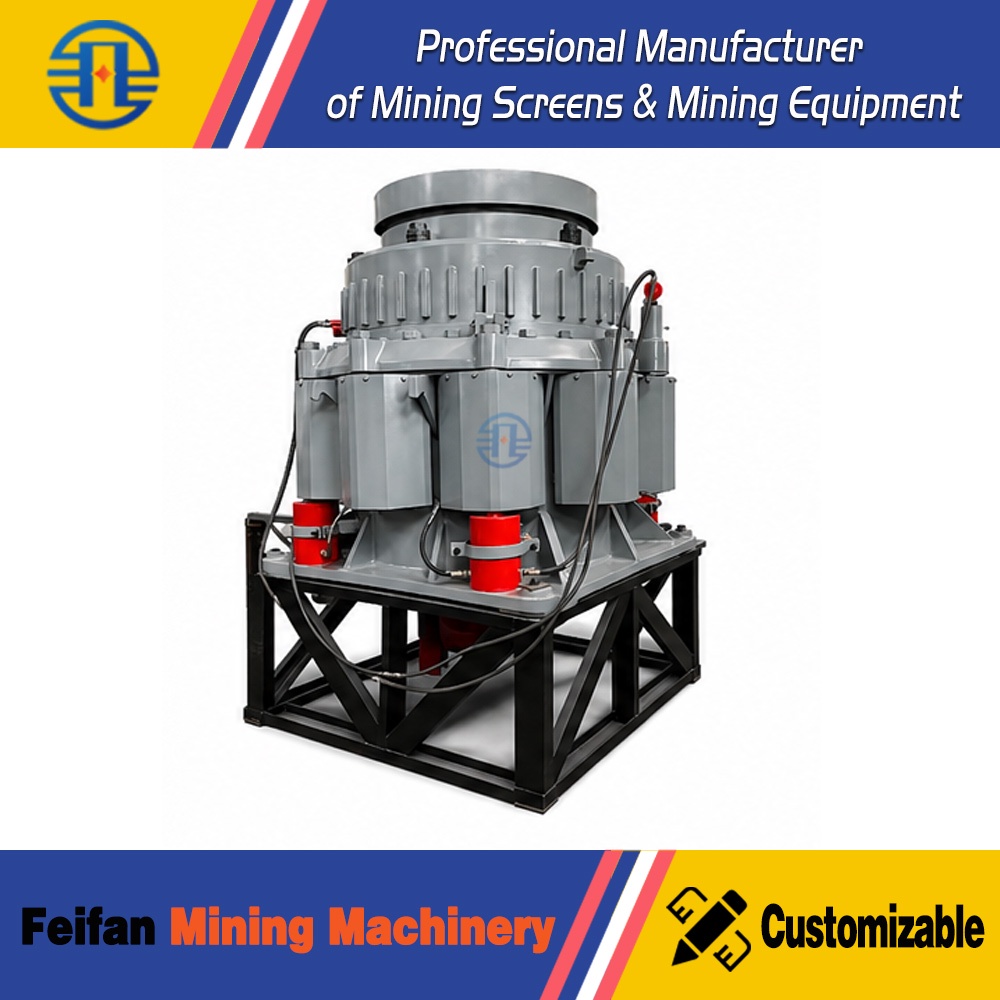
Your cone crusher is drawing near its normal operating power, the return conveyor is carrying a heavy stream, and the aggregate stockpile is growing more slowly than planned. Before specifying a larger crusher, check how much of the machine’s capacity is being consumed by material it has already processed.
In a closed-circuit crushing system, recirculating load connects crusher performance, screening efficiency, and saleable output. For project managers, this relationship matters when sizing equipment, evaluating production guarantees, and investigating why a plant misses its throughput target despite apparently busy machinery.
Separate crusher throughput from circuit output
A cone crusher’s throughput is the total material passing through its chamber. Circuit output is the material leaving the closed loop as acceptable product. These are not interchangeable figures.
Consider a simplified circuit in which all fresh feed enters the crusher, crusher discharge goes to a screen, and screen oversize returns to the same crusher. At steady state, with no material losses or additional outlets:
- F = fresh feed entering the circuit, in tonnes per hour.
- R = material returning from the screen, in tonnes per hour.
- C = total crusher feed, where C = F + R.
- L = recirculating load ratio, defined here as R ÷ F.
The resulting relationship is F = C ÷ (1 + L). A recirculating load of 100% means one tonne returns for every tonne of fresh feed—not that all crusher discharge returns.
Confirm the calculation basis before comparing reports. Some operators express return flow as a percentage of total crusher feed instead. Plants with prescreening, bypass streams, or multiple products also require a more complete mass balance.
How recirculating load affects cone crusher circuit capacity
Assume, for illustration, that a cone crusher can sustainably process 300 t/h under a particular set of material and operating conditions. The table shows how much fresh feed remains possible at different return loads.
These are mass-balance examples, not equipment ratings. Actual crusher capacity changes with feed grading, rock characteristics, chamber geometry, closed-side setting, liner condition, and operating limits.
The practical point is straightforward: when the crusher is already at its sustainable limit, more return material leaves less room for fresh feed. Raising the feed rate further may overload the chamber, increase power demand, or trigger protective controls rather than increase production.
However, minimum recirculating load is not automatically the best operating target. Returning genuine oversize is necessary to meet product specifications. A low return rate achieved by allowing oversized particles into the product is not a capacity improvement.
The screen determines what deserves another pass
Return flow contains two potentially different components: particles genuinely larger than the required separation size, and already-small-enough particles misplaced into the oversize stream. The second component consumes crusher capacity without necessarily adding useful size reduction.
For example, suppose a screen receives 300 t/h, including 180 t/h of material already below the intended separation size. If it recovers 90% of that undersize into product, 162 t/h exits and 138 t/h returns. At 80% undersize recovery, only 144 t/h exits and 156 t/h returns. This illustration assumes all true oversize is correctly retained.
The crusher discharge has not changed, yet poorer screening has increased the return burden. In continuous operation, the circulating flow and fresh-feed acceptance must settle into a new balance.
Common reasons for this unnecessary circulation include:
- Blinding or pegging: moisture, clay, or lodged particles reduce effective screening area.
- Excessive bed depth: undersize particles cannot reach the apertures before discharge.
- Uneven feed distribution: one section of the deck is overloaded while another remains underused.
- Unsuitable screen media: aperture geometry, open area, or panel layout does not suit the application.
- Incorrect operating condition: stroke, speed, inclination, or mechanical condition compromises separation.
Worn or damaged media can create the opposite problem: oversize escapes into product, making return load look better while product quality deteriorates. Screen efficiency must therefore be assessed alongside product grading, not from return tonnage alone.
Why tightening the crusher setting may not increase output
A smaller closed-side setting generally produces finer crusher discharge, which can reduce the amount of genuine oversize sent back by the screen. That sounds attractive when the return belt is overloaded.
But tightening the setting can also reduce the crusher’s sustainable throughput and increase power demand. The relevant comparison is not simply “less return”; it is the balance between total crusher capacity and the return ratio.
Using hypothetical values, a circuit processing 300 t/h at 100% recirculating load accepts 150 t/h of fresh feed. If a tighter setting lowers crusher capacity to 240 t/h but reduces recirculating load to 50%, fresh-feed capacity becomes 160 t/h. If capacity instead falls to 210 t/h, fresh-feed capacity is only 140 t/h.
Setting changes should therefore be judged by on-spec tonnes per hour, product grading, and energy per saleable tonne. They must also remain within the manufacturer’s chamber, power, hydraulic pressure, and minimum-setting limits.
A field diagnosis before approving capital expenditure
When production is behind schedule, changing several settings at once makes the cause harder to identify. Establish a stable baseline, then test one controlled adjustment at a time.
- Measure the circuit balance. Check calibrated belt-scale readings for fresh feed and return flow over the same period. Allow for changing bin levels and material accumulating within the circuit.
- Sample the relevant streams. Compare fresh feed, crusher discharge, screen product, and return grading using representative sampling procedures.
- Identify what is returning. A high proportion of below-cut material in the return stream points toward a screening problem; predominantly coarse return may indicate a crushing or feed-preparation issue.
- Locate the actual constraint. Review crusher power and pressure trends, screen loading, conveyor capacity, transfer-point restrictions, and surge storage.
- Verify the result. Track sustained on-spec output, not a short production peak immediately after an adjustment.
Sampling and inspections must follow plant isolation and guarding procedures. Moving belts, screen decks, and crusher feed arrangements are not safe locations for improvised manual checks.
Design the loop, not just the cone crusher
For a new aggregate project, equipment selection should use the expected circulating tonnage. In the simplified circuit above, both the crusher-discharge conveyor and screen handle F + R, while the return conveyor handles R. Sizing these components only for fresh-feed tonnage creates a bottleneck before commissioning begins.
Request capacity assessments across realistic feed conditions, including changes in grading, hardness, moisture, and liner wear. A single nominal operating point does not show whether the plant can maintain production through normal quarry variation. Surge capacity and responsive feed control also help prevent short-term return surges from destabilizing the crusher.
This is where integrated equipment and EPC planning becomes useful. Feifan’s scope across crushers, vibrating screens, conveyors, and custom screen media allows the crushing loop to be reviewed as an interconnected system rather than a collection of individual machines. The engineering task is to match crushing duty, screening separation, and material handling to the required product specification.
For project managers, the decisive question is not “How much material passes through the cone crusher?” It is “How much compliant product leaves the circuit consistently?” Recirculating load helps explain the gap—and indicates whether the next improvement belongs in the crusher, the screen, or the equipment connecting them.
Leave A Message
If you are interested in our products and want to know more details, please leave a message here, we will reply you as soon as we can.